REVIEW · BANFF
Banff Canyoning – Ghost Canyon (Intermediate Level)
Book on Viator →Operated by Bow Valley Canyon Tours · Bookable on Viator
A cold can turn into a fun shock. Ghost Canyon is a hands-on canyon descent near Banff where you learn ropes skills before you start dropping in. What I like is that you get a real safety clinic (not just a quick briefing), and you also get gear that’s more than a suggestion. You’ll also get a private-group feel with a maximum of 8 people, plus guides like Zak, Mark, and Marc are called out for patience and good energy.
You should, however, come prepared for the physical side. There’s about a 30–45 minute hike to the top and a mix of scrambling, hiking, and swimming-like moments through the canyon. If heights or cold water stress you out, this could feel like a long day.
In This Review
- Key highlights at a glance
- Ghost Canyon’s real draw: technical rappels, with a training-first mindset
- Banff to Canmore to Ghost Reservoir: the drive part you should plan for
- The day on the clock: suit up, safety clinic, then 3–4 hours of canyon descent
- The safety clinic you’ll be grateful for when the rope is in your hands
- What the canyon sections feel like: rappels, scrambles, slides, and pool jumps
- The four rappels
- Scrambling and hiking between drops
- Slides and pool jumps
- Gear and comfort: wetsuit setup that actually covers the hard parts
- Fitness and comfort: who this intermediate trip fits best
- Price and value: why $221.43 can make sense here
- Should you book Banff Canyoning – Ghost Canyon?
- FAQ
- How long is Banff Canyoning – Ghost Canyon?
- Is pickup included?
- Do I need prior rappelling experience?
- What should I be comfortable with?
- What’s the minimum age?
- How big is the group?
- What happens if weather is bad?
Key highlights at a glance
- Four rappels plus slides and pool jumps make the day feel like a sequence, not just one long drop
- Mandatory rappel and rope safety clinic happens before you enter the canyon action
- Private transportation reduces the hassle and keeps the schedule tight
- Full wetsuit setup (including neoprene socks/booties) helps you stay warm enough to focus
- Intermediate-friendly without prior experience if you’re comfortable with heights and swimming
- Group size capped at 8 so instruction stays personal
Ghost Canyon’s real draw: technical rappels, with a training-first mindset
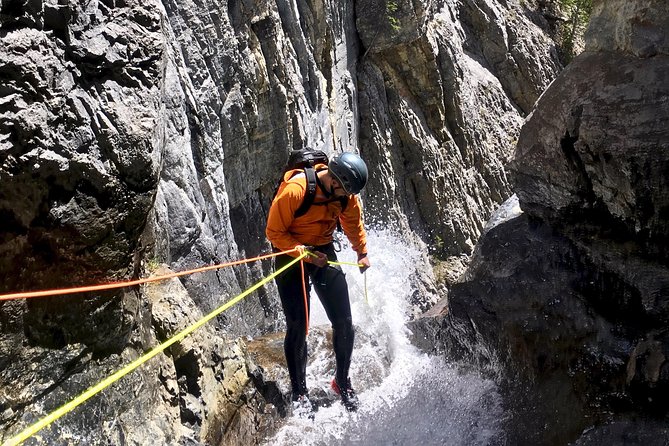
Ghost Canyon canyoning has one job: get you moving through a Rocky Mountain canyon while teaching you how to do it safely. This is an intermediate route, and you can feel that in the flow of the day. You’ll start with instruction, then transition into the actual canyon descent with a steady rhythm of rope work and in-between hiking.
The best part is that the guides don’t treat safety like a checkbox. Everyone does a mandatory rappel and rope safety clinic before you head into the canyon. That matters because canyoning is not only about bravery—it’s about repeatable technique: how you clip in, how you manage rope, and how you trust your system. When you’ve done the basics correctly on land, the canyon turns from scary unknown into a sequence you can follow.
Second, you’re not just dropped into the water and hoped for the best. The day is structured around personalized instruction on a private tour—meaning you’re with your own group only, up to 8 people. That extra attention is the difference between watching others and actually understanding what to do on your own rappel.
One more thing: the guide vibe matters out here. In the feedback I saw, guides such as Zak, Mark, and Marc are specifically praised for being friendly, patient, and upbeat. That’s not a small detail. In a sport where you’re learning while you’re clipped into a rope system, encouragement helps.
You can also read our reviews of more tours and experiences in Banff.
Banff to Canmore to Ghost Reservoir: the drive part you should plan for
Your day starts in the Banff area, and then it expands out toward the Canmore side. The tour includes private transportation, so you’re not juggling parking, rental logistics, or public bus transfers on your own.
Typically, you’ll travel:
- from Banff into the Canmore area,
- then out toward the Ghost Reservoir Provincial Recreation Area,
- and back toward Banff at the end.
Even though the canyoning itself is only part of the total time, the drive and transition time are very real. The schedule includes an approximate 1.5-hour van ride, then a 30–45 minute hike to reach the top of the canyon adventure.
If you don’t have a car in Banff, the setup is straightforward but worth thinking through early. Public Roam Transit line 3 runs from Banff town centre to the Legacy Trail bus stop in Canmore about every 30 minutes. You’d take the bus to Canmore, then the operator can pick you up there—usually about 20 minutes before your start time. This is the kind of practical detail that saves you from showing up late and feeling rushed.
A small consideration: the day is long enough that you’ll want to eat before you’re out in the mountains. The tour runs about 8 hours total, and you’re unlikely to want to scramble for snacks mid-process.
The day on the clock: suit up, safety clinic, then 3–4 hours of canyon descent
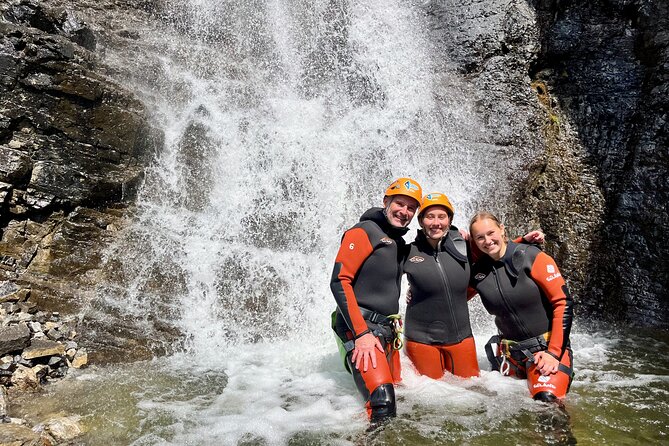
On paper, 8 hours sounds like a lot. In practice, the timing actually makes sense because you’re stacking three big phases: travel, preparation, and the descent.
Here’s the rhythm you should expect:
1) Meet your group at the staging area or at pickup (with start time at 8:00 am).
2) Drive roughly 1.5 hours to the canyon area.
3) Hike 30–45 minutes to get to the top.
4) Suit up—everyone gets geared up in the wetsuits and safety equipment.
5) Do the mandatory rope and rappel clinic.
6) Descend the canyon for about 3–4 hours, including rappels plus moving sections.
The key thing: you’re not just doing “the main event.” The time before the first rappel is part of the experience. It’s where you learn how the day works so you can enjoy it rather than fear it.
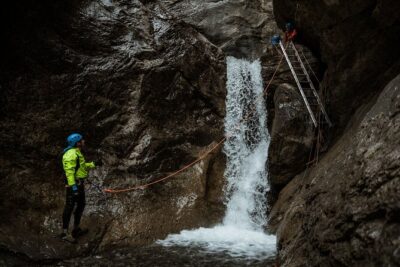
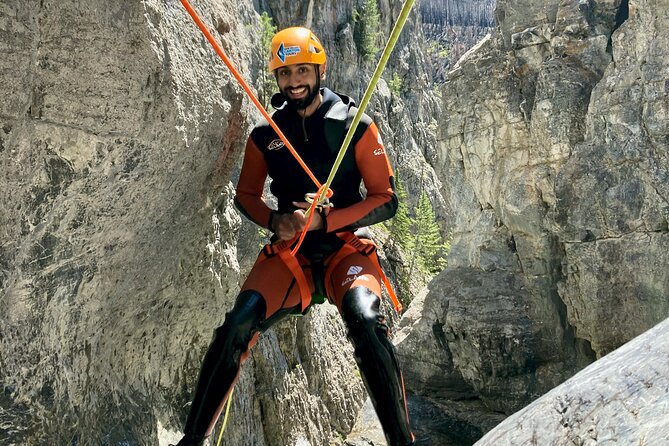
In the canyon, the route is broken up into four rappels. Between those drops, there’s scrambling and hiking. You’ll also hit several slides and a few easy but fun pool jumps. That combination is why this trip lands in the intermediate category—it’s active and varied, not one single vertical moment.
The safety clinic you’ll be grateful for when the rope is in your hands
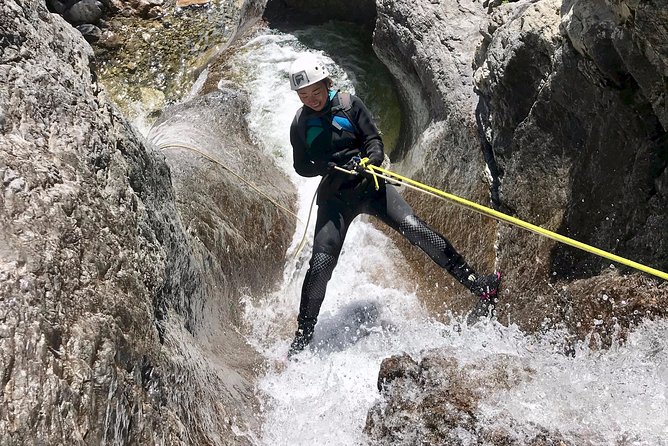
The sport’s name is canyoning, but the real skill is confidence with systems. That’s why the guides start with a rappel and rope safety clinic that everyone must complete.
This isn’t just theory. The clinic is meant to get you comfortable with:
- how rappelling feels on your body,
- how rope handling works,
- and how your harness setup and connections support you.
If you’ve never rappelled before, this is a relief. The trip doesn’t require prior rope experience. What it does require is that you’re relatively comfortable with heights and swimming, and that you have at least moderate physical fitness.
Think of the clinic as your on-ramp. Once you’ve practiced the motions and learned what correct looks like, the four rappels stop feeling like a gamble. They become steps.
And based on the guide names mentioned—Zak, Mark, and Marc—the guides’ style seems to be built around patience. That’s huge for first-timers who can handle heights but need time to process the mechanics.
What the canyon sections feel like: rappels, scrambles, slides, and pool jumps
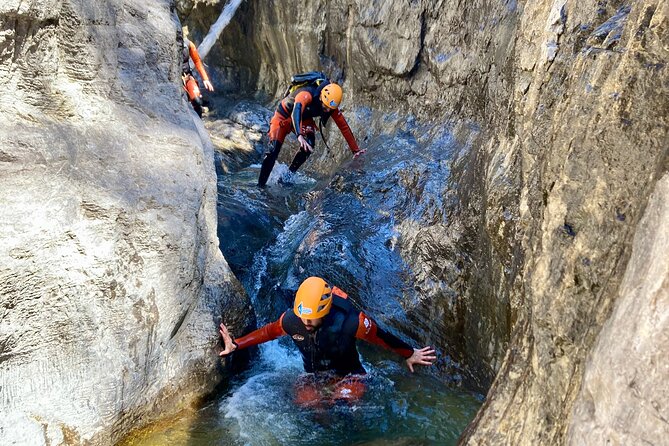
You’ll move through Ghost Canyon like a sequence of mini-adventures. The day is paced so you’re not waiting around for one big moment the entire time.
The four rappels
There are four rappels total. Each one gives you a different chance to practice control—how you manage your descent and how you keep your focus. Even if you’re excited, the right mindset is to treat each rappel as its own small challenge.
Scrambling and hiking between drops
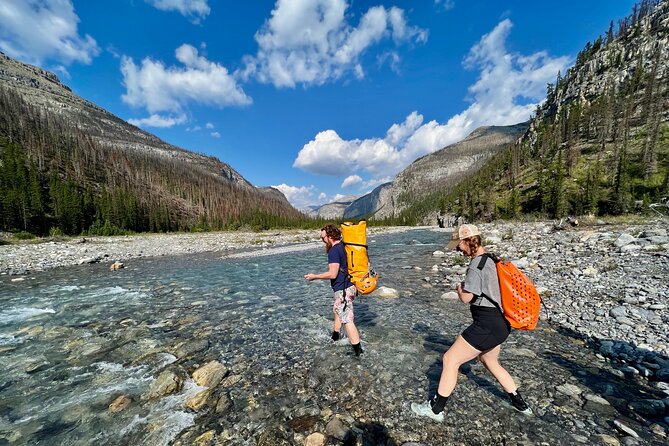
Between rappels, you’re not simply hanging on rope. You’ll scramble and hike parts of the route. That matters for two reasons. First, it adds variety, so the day doesn’t become monotonous. Second, it means you’ll want good energy and balance. If you’re okay moving over uneven terrain, you’ll enjoy the flow much more.
Slides and pool jumps
You’ll also encounter several slides and easy pool jumps. Those moments are the trip’s fun factor. They’re also a reminder that this is water-adjacent adventure sport. You don’t have to be an elite swimmer, but you do need to be comfortable getting in and out of cold water without turning it into a panic.
The mix of rope work plus play-style water moments is a big reason this is often loved by people who want more than a basic hike.
Gear and comfort: wetsuit setup that actually covers the hard parts
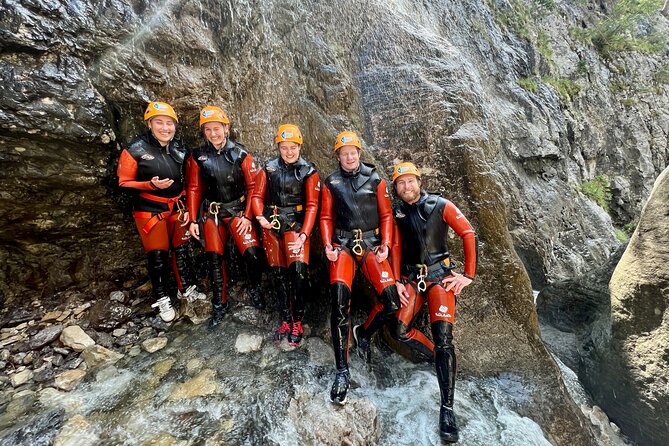
Cold water canyoning can be miserable if your gear doesn’t fit your needs. Here, you get a full wetsuit package designed for this kind of activity:
- wetsuit top and bottom,
- neoprene socks/booties,
- helmet,
- harness,
- and all necessary rappelling equipment.
This is where value hides in plain sight. You’re not paying to rent a mystery item. You’re showing up and getting outfitted with the basics you need to stay warm enough to keep moving safely.
If you’re wondering what matters most: neoprene socks/booties matter more than people think. Foot comfort affects balance on scrambling sections, and it affects how willing you are to hop into water without hesitation.
The gear list is also a reason to wear comfortable layers under the wetsuit setup—whatever you normally use for dry comfort. The tour doesn’t call out clothing specifics, so keep it simple and practical.
Fitness and comfort: who this intermediate trip fits best
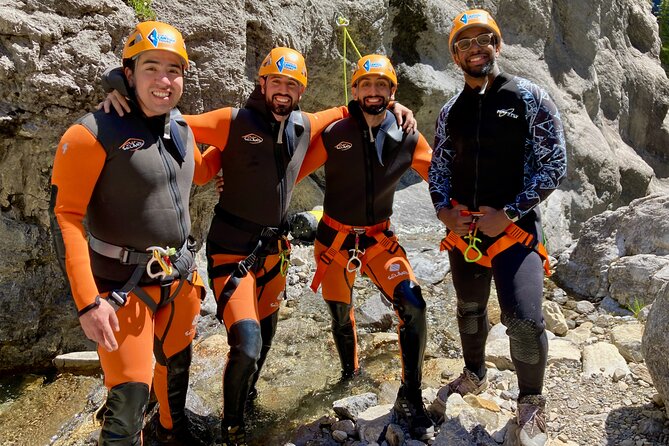
This isn’t a casual stroll. It’s active, and you should go in expecting:
- a 30–45 minute hike to reach the top,
- a 3–4 hour descent with scrambling and rope moments,
- and water exposure with slides and jumps.
The minimum age is 15 years old, and previous rope experience is not required. Still, you need to bring two comfort factors:
- comfort with heights,
- comfort with swimming.
If you’ve hiked mountains confidently and you can handle uneven ground, you’re likely in good shape. If you’re only used to flat walking and you get shaky around heights, you might find this harder than you expected—even with training.
Also, the group size maxes out at 8 people. That’s helpful for pacing and individualized guidance, but it also means the guides need everyone ready to move when it’s time to rappel or transition.
Price and value: why $221.43 can make sense here
At $221.43 per person, Ghost Canyon isn’t cheap, and that’s fair. The value comes from what’s bundled into the price and how much of the day is guided.
You get:
- a professional guide,
- professional rappelling instruction/clinic,
- wetsuits (including neoprene socks/booties),
- helmet and harness,
- all rappel equipment,
- and private transportation.
Most trips like this either leave you handling key items yourself or limit instruction. Here, the big ticket item is the combination of gear + instruction + transport. If you had to piece together equipment rental, travel logistics, and a guided technical activity separately, the total cost would usually creep higher fast.
There’s also the timing factor. At about 8 hours, the day is packed. You’re not paying for a short highlight; you’re paying for a full half-day style adventure plus training and logistics.
One more pricing-value signal: the feedback rating is 4.9 with 31 units of feedback, and 97% recommendation. That kind of consistency usually points to solid guiding and a trip that matches what it promises.
Should you book Banff Canyoning – Ghost Canyon?
Book it if you want a canyon day where the technique is taught and the scenery-and-action come together in a controlled way. You’ll likely enjoy this most if you:
- are excited by rappels and water features,
- can handle moderate fitness demands,
- and feel okay with heights and swimming.
Skip it (or consider another style) if you freeze up at the idea of rappelling or if water exposure stresses you out. This is intermediate. You’ll be supported, but the canyon is still physically and mentally active.
If you’re the type who likes clear instruction, a patient guide, and a day that feels like more than one moment, Ghost Canyon fits. With guides such as Zak, Mark, and Marc highlighted for friendly guidance, it’s the kind of trip where you can learn without losing the fun.
FAQ
How long is Banff Canyoning – Ghost Canyon?
The activity lasts about 8 hours, with the canyon descent taking roughly 3–4 hours as part of the day.
Is pickup included?
Pickup is offered, including pickup from Canmore (with instructions tied to a nearby meeting spot). The tour also returns you back to the meeting point at the end.
Do I need prior rappelling experience?
No prior rope or rappelling experience is required. You’ll take part in a mandatory rappel and rope safety clinic.
What should I be comfortable with?
You should be relatively comfortable with heights and swimming, since the route includes rappels, water slides, and easy pool jumps.
What’s the minimum age?
Participants must be at least 15 years old.
How big is the group?
It’s a private tour/activity with a maximum of 8 people and a minimum of 2 people.
What happens if weather is bad?
If the experience is canceled due to poor weather, you’ll be offered a different date or a full refund.
If you want, tell me your comfort level with heights and swimming (and whether you have a car in Banff), and I’ll help you decide if Ghost Canyon sounds like your kind of intermediate day.