REVIEW · BANFF
Banff: Kananaskis River Whitewater Rafting Tour
Book on GetYourGuide →Operated by Canadian Rockies Rafting · Bookable on GetYourGuide
Whitewater rafting in Kananaskis is one of those rare tours that’s genuinely fun for first-timers and still delivers real punch. You’ll gear up fast, get clear paddling commands, then hit 10+ rapids on a Class 2-3 stretch that does not feel timid once you’re in the flow. Guides like Geoff and Sam (based on recent trips) bring the right mix of humor, safety, and local stories that make it feel more like a day out than a chore.
The big thing I like is how the outfit takes care of the messy parts: you get the full wetsuit and river gear so the cold and splash stay part of the plan, not a surprise. Second, I love the way the tour builds in calmer water for river games and playful moments, so you’re not gripping the paddle for all four hours. One consideration: you’ll get wet in all weather, and cameras and even cellphones are not allowed on the river, so plan on leaving valuables behind.
In This Review
- Key highlights you’ll actually feel on this rafting day
- Kananaskis Rapids: what Class 2-3 feels like in real life
- Your start near Stoney Nakoda: check-in, timing, and gear-up
- What you’re really paying for: $95 and the included gear
- On the water: paddling commands, rapid hits, and the Olympic course twist
- Calmer sections: river games that make the raft feel like a team
- The swim spot and your end-of-trip landing
- Gear, rules, and what to pack so you’re not scrambling
- Who this tour suits best in the Banff and Canmore area
- Price and value: why $95 can feel like a steal here
- Should you book this Kananaskis River whitewater rafting tour?
- FAQ
- How long is the rafting tour?
- What gear is included, and what should I bring?
- Are cameras or phones allowed during the trip?
- Is Canmore pickup included?
- Who is this tour not suitable for?
- When can I buy the tour photos?
Key highlights you’ll actually feel on this rafting day
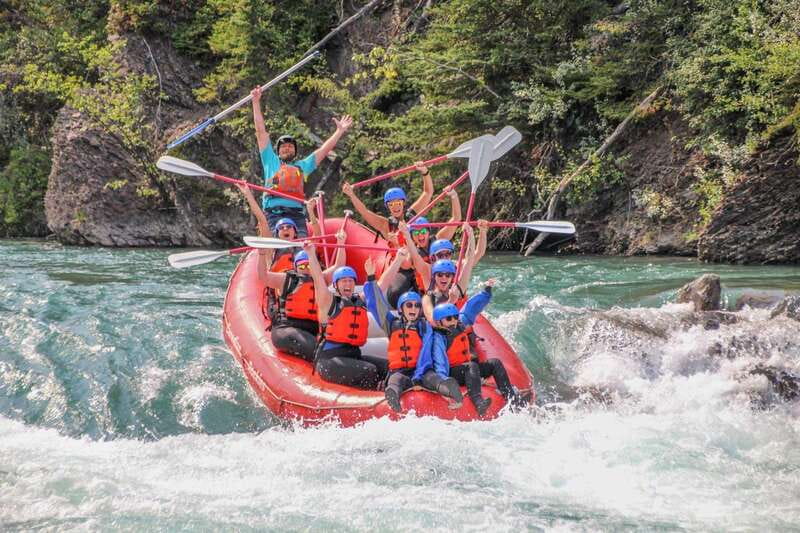
- 10+ rapids in one trip so you’re not waiting around for the fun to start
- An Olympic kayaking race course section that adds a real-world edge to the route
- Full wetsuit kit (plus splash jacket when needed) so cold days don’t automatically ruin it
- River games and playtime on calmer sections, which keeps the energy high
- Optional swim spot for people who want to add one more hit of excitement
Kananaskis Rapids: what Class 2-3 feels like in real life
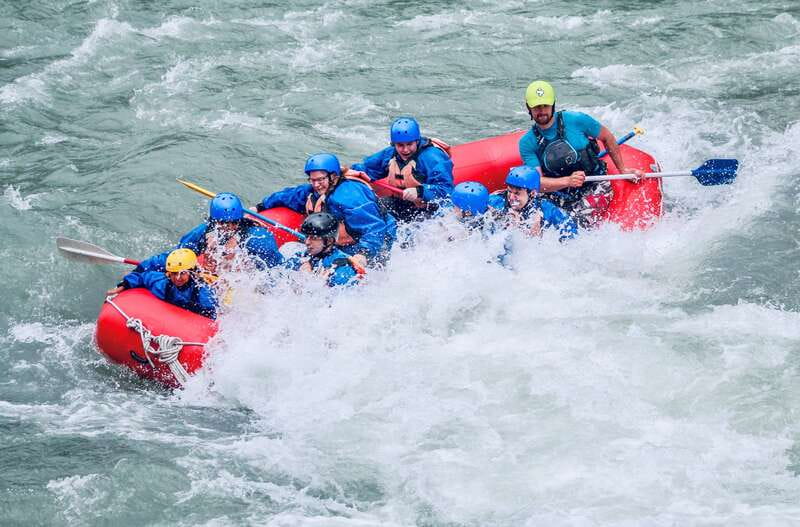
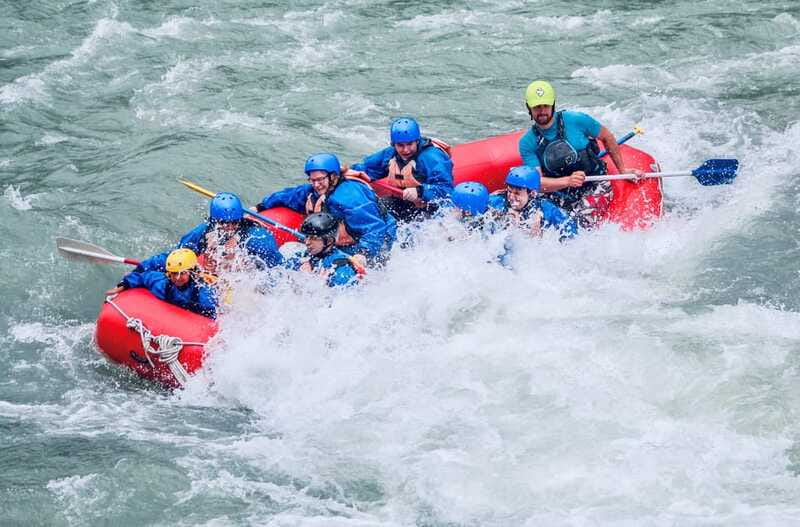
This tour is listed as a Class 2-3 whitewater run, and that wording can make some people think it’s “safe adventure.” On the water, the experience reads differently. You’ll be paddling through more than a handful of rapids and taking splashes that land like a splash-and-go wakeup call, not a gentle float.
The best way to think about it: it’s approachable, but it’s still whitewater. You’ll get those heart-thumping moments when the raft tilts, water surges, and your guide calls out what to do next. Recent guides you might get, like Geoff, Sam, Nelson, Zac, and Tom, come across as people who keep instructions simple and immediate, which matters when the river suddenly looks louder than your brain expected.
Also, this is a route with variety. The tour isn’t just a straight line of rough water; it includes calmer stretches built for participation. That pacing is part of why the overall mood stays high, even when you’re punching through louder sections.
You can also read our reviews of more tours and experiences in Banff.
Your start near Stoney Nakoda: check-in, timing, and gear-up
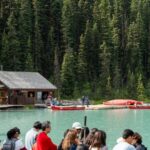
Most Banff-area rafting days have a “logistics shuffle” phase. This one is handled pretty cleanly. If you’re meeting at the River Base, you’ll head toward the front entrance of the Stoney Nakoda Resort and Casino. On the left, look for a wooden structure with a picnic table and red rafts. Park in the adjacent lot, then walk across the road to check in with the team.
The flow you can expect is straightforward:
- Check in and get sized up
- Gear up with the full river kit
- Do a safety briefing around the demo raft
- Load buses for a short drive to the river put-in
That short drive is only about five minutes, so you don’t waste half a day “getting ready.” Once you’re at the put-in, you’ll get a guide-led rundown of paddling commands and what you should do during common moments on the river. Then you’re in the raft and going.
One practical note from the vibe of the reviews: the gear quality seems to make people feel more confident fast. Folks talk about wetsuits keeping them comfortable even when it’s cold or rainy. If you’re sensitive to cold, this matters a lot. If you’re not, you’ll still appreciate being able to focus on the river instead of shivering.
What you’re really paying for: $95 and the included gear
At $95 per person for a four-hour tour, this is one of those deals that pencils out because the cost covers the things you’d otherwise have to figure out yourself. You’re not just buying access to rapids. You’re buying everything needed to do it properly.
Included in the price:
- All river gear: wetsuit, life jacket, helmet, booties, splash jacket, and a wetsuit jacket for colder days
- An experienced guide
- A refreshing non-alcoholic beverage after
- Transport to and from the river from the River Base
Two value points worth highlighting. First: you don’t have to shop for cold-water protection or figure out sizing. Second: you get a guide for real instruction, not just “ride along and hope.”
What’s not included: Canmore pickup/drop-off. If you want it, you need to pre book a shuttle from Canmore by contacting Canadian Rockies Rafting. If you don’t have your own car and you want a low-stress day, that shuttle option is a big part of making the whole thing feel worthwhile.
And about photos: you’ll get instructions on where to view and purchase tour photos. Photos are available 24-48 hours after the trip. Also remember cameras are not allowed during the rafting portion, so don’t rely on bringing your own shot-taking plan.
On the water: paddling commands, rapid hits, and the Olympic course twist
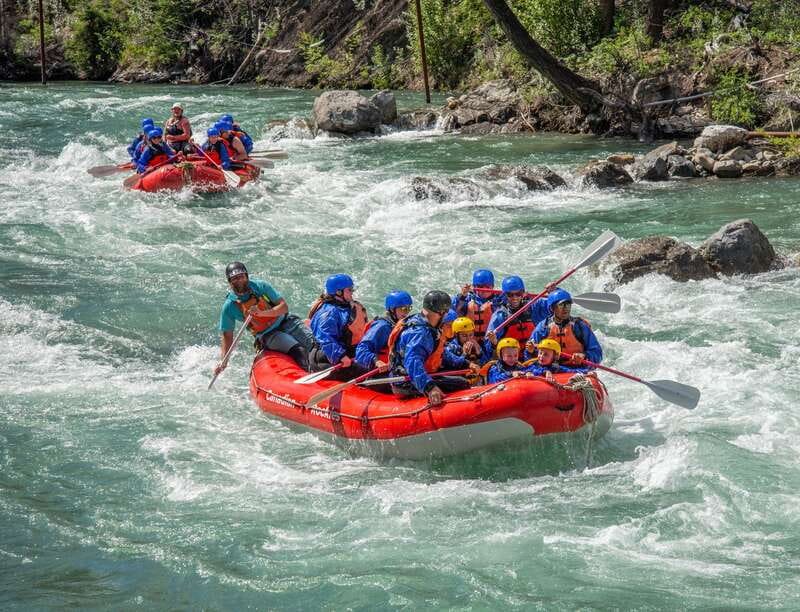
When you first step into the raft, the guide’s job is to make you feel capable. The tour does that by going over paddling commands before you head into the main run. Listen closely here. If your guide says to paddle hard on one signal and relax on another, it’s not random. The raft’s speed and how it angles into waves and drops depends on it.
Then comes the fun part: you’ll punch through 10+ rapids. Even if you’re not a thrill-seeker, the number of rapid moments changes the feel of the day. You’re not landing in one “big moment” and then waiting. You keep moving from splash to splash, with the guide calling out what’s happening and when you’ll need to react.
One of the more interesting highlights is the navigation through an Olympic kayaking race course. Even without a bunch of extra technical explanation, this matters. It suggests the river stretch is set up for athletic paddling and clean lines—so you get a more structured, track-like feel to parts of the route. That structure often translates into better flow and more readable rapids for a first-time group.
Guides with names you might recognize from past trips—Sam, Geoff, Eoghann/Eoghan, and Quynton are a few—tend to keep the vibe light while still being firm about safety. That’s a real skill. You want “serious enough to be safe,” but you also want people laughing when water hits your face.
Calmer sections: river games that make the raft feel like a team
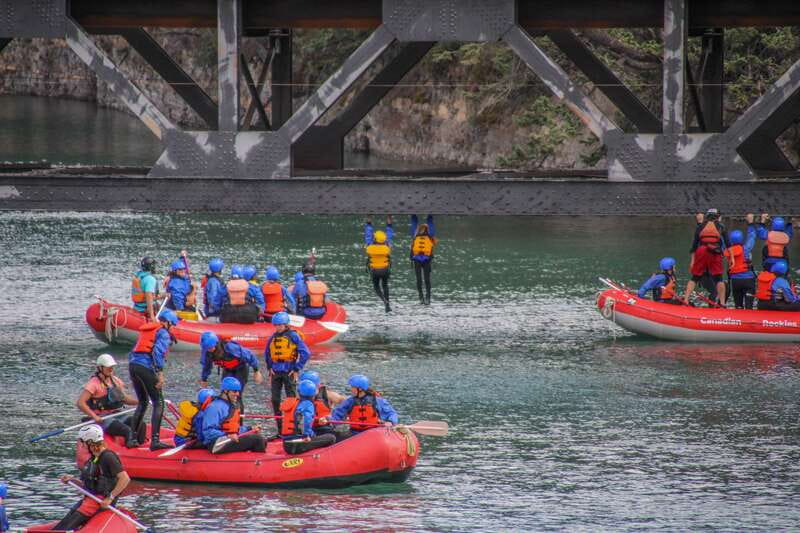
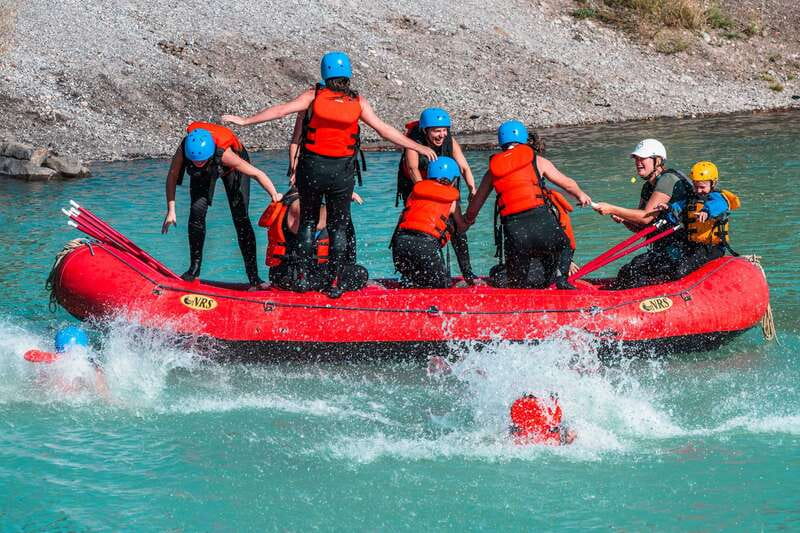
A common fear for new rafters is that the entire trip will be one long grind. This tour avoids that problem by building in calmer water sections. On those stretches, you’ll do river games and playful interactions that help you reset your muscles and your nerves.
This is also where you’ll appreciate the guide coaching. If you’re unsure what you’re doing, this is when you can actually learn the rhythm of the raft. The calmer sections help you understand how your paddle strokes affect the raft position and speed before you’re back into a louder rapid.
The tone here is part of the reason people keep recommending this as a family-friendly option. One review mentioned an age range from five years old up to the mid-60s, and the general point was that it felt safe while still giving the more adventurous people chances to lean into the moment.
If you’re traveling with mixed experience levels, this tour’s structure helps everyone have something to do: first-timers get instruction and confidence, and experienced thrill-lovers still get the rapids and the splash factor.

The swim spot and your end-of-trip landing
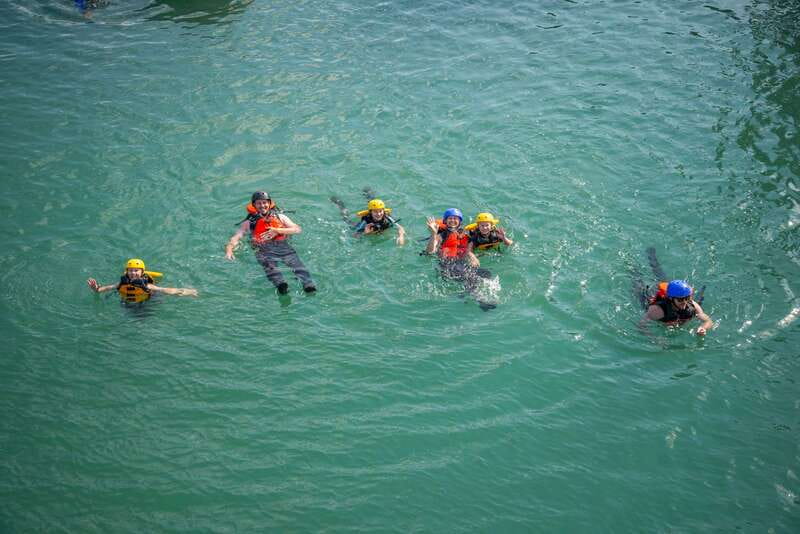
This tour includes an optional swim spot. That doesn’t mean you’re forced into anything. It means there’s a moment later in the trip where you can choose to jump in if you want. Recent feedback includes mention of people having the chance to jump and swim to shore near the end, so the “swim idea” is real in practice.
The end of the rafting day is also where you’ll decompress. You’ll reunite with the buses for a quick return ride—about 10 minutes—to the River Base, then you can change out of gear and grab a refreshing non-alcoholic beverage.
Two practical tips here:
- Bring a towel and a full change of clothes. You’ll feel glad you did.
- If you’re nervous about cold water, the wetsuit and gear do the heavy lifting, but your comfort is still affected by how prepared you are with dry clothes.
Also, plan your expectations around the no-phone rule. If you want the end-of-trip moment captured, consider buying photos after instead of trying to sneak your phone out.
Gear, rules, and what to pack so you’re not scrambling
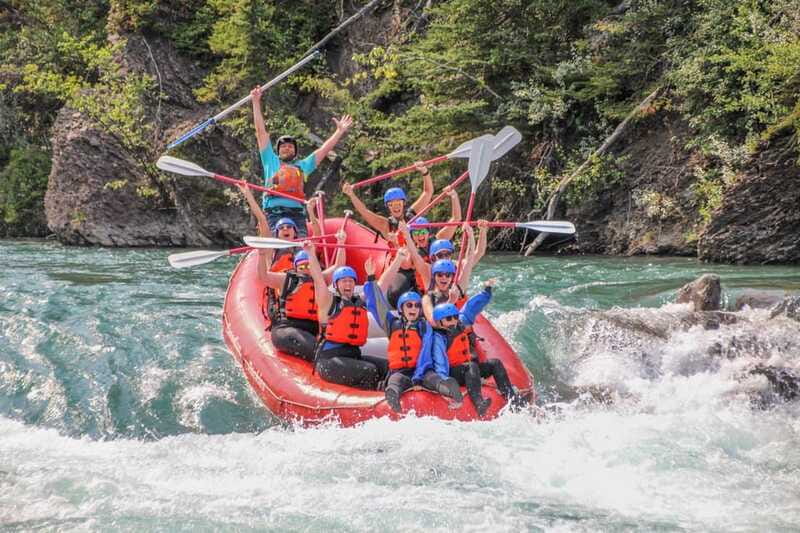
The tour gives you a lot, but you still need to show up ready. Here’s what to bring from the provided guidance:
- Warm clothing
- Swimwear
- Change of clothes
- Towel
- Biodegradable sunscreen
- Personal medication
What to leave out:
- Cameras
- Backpacks, bags
- Alcohol and drugs
- Cellphones
- Bare feet
That no-cameras and no-cellphones rule is the biggest “surprise” risk for first-timers. In this setup, the provider is handling photo capture for you, and you’re not meant to be juggling devices in moving water.
On the day, you’ll likely feel a little awkward at first in the gear. That’s normal. Your job is to listen and get comfortable with the commands. You’ll also be glad you wore something warm underneath your wetsuit kit.
One more packing reminder: biodegradable sunscreen is specifically called out. If you forget and use regular sunscreen, you’ll be stuck waiting or improvising.
Who this tour suits best in the Banff and Canmore area
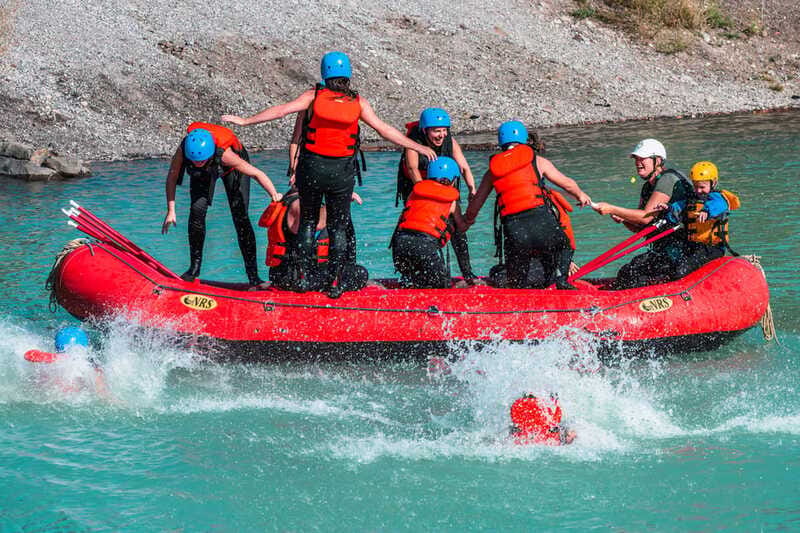
This is a great fit if you want a one-day Banff-area thrill without going full expedition mode. It’s especially well suited for:
- First-time rafters who want real instruction
- Families with a wide age range (since the tour is designed for people to feel safe and included)
- Travelers who like structure: paddling commands, predictable stops, and calmer interludes
It’s less suited for people who might struggle with the physical reality of rafting gear and cold water exposure. The tour is not suitable for:
- Children under 5 years
- Pregnant women
- People over 350 lbs (159 kg)
- Children under 44 lbs (20 kg)
If you’re unsure where you land, you can also use the “how it feels” guide from the experience level: you’re not doing hiking; you’re doing water movement and rapid participation. As long as you can handle getting soaked and following guide directions, it’s typically a good match.
Price and value: why $95 can feel like a steal here
At $95 for four hours, you’re getting an organized, gear-supported, guided run with real rapid content. In places like Banff, adventure pricing can jump quickly once you factor in transportation, equipment, and guide time. Here, the cost includes the full river gear and the after-tour beverage, which is a big part of why it feels fair.
The other value lever is the guide quality. Multiple reviews highlight guides who are funny and reassuring, like Geoff and Sam, plus guides who manage nerves and keep the group engaged. When the guide can teach you safety fast and keep you laughing through the splashes, the day feels smoother. That smoothness is worth money, because it lowers the mental friction for first-timers.
If you’re comparing alternatives, ask yourself what you’d pay for wetsuit rental plus a proper guided safety briefing. Even before you count the rapids, this format is built to be “ready-to-raft” from the start.
Should you book this Kananaskis River whitewater rafting tour?
Book it if you want a guided Banff-area rafting day that mixes real rapids with enough calmer water to keep it fun. The Olympic course highlight adds a cool extra layer, and the optional swim spot gives you a chance to add one more memory if you’re feeling brave.
Skip it if you can’t handle getting soaked in rain or cold, or if you fall into the stated limitations (under the age/weight thresholds, pregnant, or over the weight limit). Also consider your phone and camera situation. If you need to film everything yourself, this setup won’t work for you.
If you’re the kind of traveler who likes a well-run plan with strong guide energy, this is an easy yes.
FAQ
How long is the rafting tour?
The tour lasts 4 hours.
What gear is included, and what should I bring?
You’re provided with wetsuit, life jacket, helmet, booties, splash jacket, and a wetsuit jacket for colder days. Bring warm clothing, swimwear, a change of clothes, a towel, biodegradable sunscreen, and any personal medication.
Are cameras or phones allowed during the trip?
No. Cameras and cellphones are not allowed on the tour.
Is Canmore pickup included?
Canmore pickup and drop-off are not included. A shuttle from Canmore can be pre booked by contacting Canadian Rockies Rafting.
Who is this tour not suitable for?
It is not suitable for children under 5 years, pregnant women, people over 350 lbs (159 kg), and children under 44 lbs (20 kg).
When can I buy the tour photos?
Photo instructions are provided after the tour, and photos are available for purchase 24-48 hours later.