REVIEW · BANFF
Ice Climbing Adventure in Banff: Beginner
Book on Viator →Operated by Alpine Air Adventures · Bookable on Viator
Ice climbing in Banff sounds scary, until it isn’t. This beginner program gets you up close to waterfall ice in the Canadian Rockies while teaching the exact safety moves that make climbing feel manageable. I love that the guides handle gear fitting and step-by-step instruction, and you leave with real, usable skills—not just photos. One thing to factor in: winter conditions can be brutally cold, and schedules can get adjusted to match the weather and the ice.
You’ll start early from 229 Bear St in Banff and head out toward the most iconic winter scenery around town. The guide team is ACMG/IFMGA trained, and the group stays small (up to 12), so you’re not lost in a crowd. Icefall location can vary, which is great for flexibility, but it also means you should plan for a day that feels a bit location-dependent.
In This Review
- Key Points You’ll Care About Before You Go
- Ice Climbing in Banff for Beginners: What Beginner Really Means
- Your Guides, Your Safety: Skills That Make Climbing Click
- Gear Included (and Why It’s a Big Deal in Ice)
- Banff to Johnston Canyon: The Real Flow of the Day
- Banff National Park: Big-Mountain Context, Fast Setup
- Johnston Canyon: The Ice-Wall Target
- Grassi Lakes: Cold Scenery and More Time to Practice
- Waterfall Ice Climbing Practice: From Crampons to Ice Screws
- Core beginner skills you’ll cover
- If conditions and time allow, you might progress
- The Cold Weather Factor: When -24°C Changes Everything
- Price and Value at $194.36: What You’re Getting vs. What You’ll Need
- Who This Beginner Ice Climbing Trip Fits Best
- Should You Book Ice Climbing in Banff for Beginners?
- FAQ
- What is the duration of the Banff beginner ice climbing experience?
- How much does the tour cost?
- Where do I meet, and when does it start?
- What gear is included?
- Are lunch or private transportation included?
- What skills will beginners learn?
- How many people are in a group?
Key Points You’ll Care About Before You Go
- Beginner-focused teaching: walking in crampons, belaying top rope climbers, and moving on steep ice.
- All gear is included: helmet, harness, ice tools, crampons, and climbing boots.
- Pro mountain guides (ACMG/IFMGA): safety coaching is built into the day, not tacked on at the end.
- Johnston Canyon vibes: one common setup includes a short hike (often around 20 minutes) to the ice wall area.
- Cold weather reality: extreme temperatures can shorten the outing to keep everyone safe and comfortable enough to learn.
- Transport is on you: private transportation to the climbing site is needed, since it’s not included.
Ice Climbing in Banff for Beginners: What Beginner Really Means
This is not a thrill ride where you just hang on and hope. It’s a skills day built around safe progression: get comfortable on the basics first, then gradually add complexity. That matters because waterfall ice is steep and slick in ways regular hiking shoes just can’t prepare you for.
You’ll work on fundamentals like site safety and awareness, how to walk in crampons without doing the penguin waddle for hours, and how to belay top-rope climbers. Then you move into the core skill ice climbing people brag about: using ice tools and crampons together to step and swing your way up steep, frozen flow.
For many first-timers, the biggest win is confidence. You learn the moves in a structured way, so the sport stops feeling like a secret society.
You can also read our reviews of more tours and experiences in Banff.
Your Guides, Your Safety: Skills That Make Climbing Click
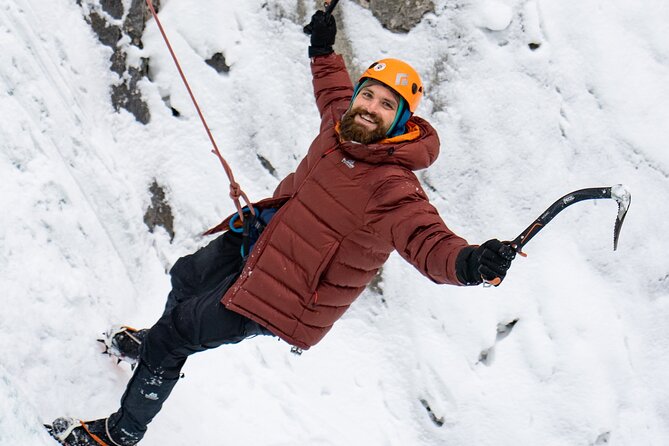
A good ice climbing day is mostly communication. The guides spend time on how to fit and use gear safely, plus the safety rules that keep things calm even when it’s loud with wind and cold. You’re also taught how to handle your rope responsibilities, because belaying isn’t optional—it’s part of the sport.
If you’re new, expect a lot of “do this, check that” coaching. In cold weather, that tight feedback loop is what turns awkward into controlled. If you have climbing experience, you’ll still get value because you’ll be applying climbing skills to a totally different medium—ice, not rock.
Names you may hear in the field include guides like Nolan and Shea, both known for teaching with a steady, safety-first approach. It’s exactly the kind of guiding style that helps you focus on technique instead of fear.
Gear Included (and Why It’s a Big Deal in Ice)
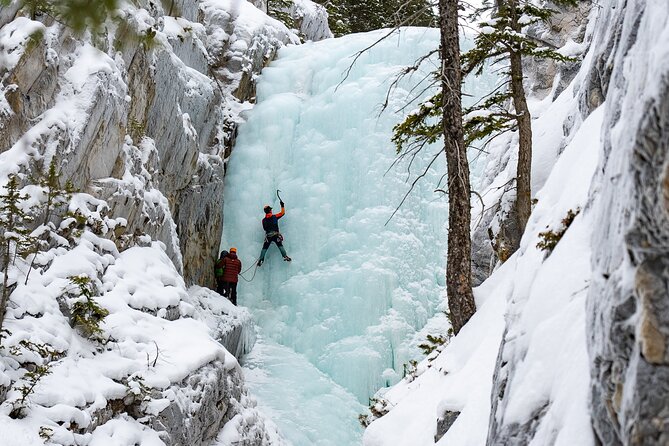
The price includes a full kit: helmet, harness, ice tools, crampons, and climbing boots. That’s huge because the “right” gear is more about fit and safety than it is about brand names. Crampons that don’t match your boots can feel miserable, and they can be unsafe. Tools that aren’t set up correctly can slow you down and make every move more work.
On top of that, you’ll get help with how things go together. The guide isn’t just handing you a bag of hardware; they show you what to check and how to use the setup on steep ice. For beginners, that reduces stress fast.
One practical note: because you start in the morning and the day can run long, having the right footwear from the start helps you spend less time adjusting and more time learning.
Banff to Johnston Canyon: The Real Flow of the Day
The outing runs about 7 hours and begins at 7:45 am. It loops through three big areas: Banff National Park, Johnston Canyon, and Grassi Lakes. Even if the exact icefall location varies, the pattern is similar: you’re using these famous spots as your winter playground and staging area.
Here’s what each stop is doing for you, beyond just being on a map:
Banff National Park: Big-Mountain Context, Fast Setup
This is where the day starts to feel like the Canadian Rockies you came for. You’re in a wild, high-country setting that makes even a short learning hike feel worthwhile. The bonus is that you can get oriented early—safety rules, gear checks, and the first instructions before you’re standing under a vertical wall of ice.
The drawback? In winter, everything is slower—movement, walking, and transitions. That’s normal. Just don’t assume you’ll be done quickly; you’re there to learn a sport.
Johnston Canyon: The Ice-Wall Target
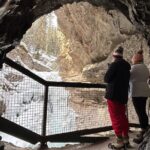
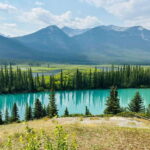
Johnston Canyon is a strong pick for waterfall ice climbing because the frozen structure turns the sport into a clear, visible objective. For many groups, you’ll hike in with your guide to reach the ice wall area, and a short hike (often around 20 minutes) is a common experience level.
This stop is where the day gets real. You’ll go from “gear and rules” to “tools and steps.” If you’re hoping to feel the thrill without needing prior climbing reps, this is the point.
Grassi Lakes: Cold Scenery and More Time to Practice
Grassi Lakes often means more views, more winter atmosphere, and time to work on skills while the day is still moving. If you’re doing the full-day version, this stop helps spread the learning out instead of compressing everything into one frantic climb session.
If you end up with fewer climbing opportunities due to cold or ice conditions, Grassi Lakes can still make the day feel substantial because it keeps the experience grounded in the surrounding scenery.
Waterfall Ice Climbing Practice: From Crampons to Ice Screws
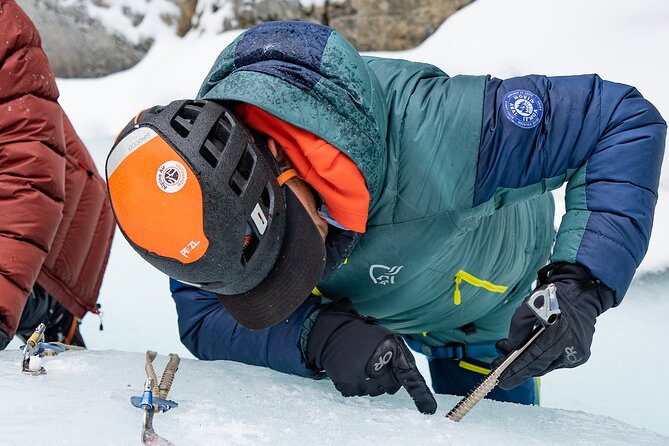
This program is built in layers. First comes the basics. Then, depending on what’s happening with ice and how you’re progressing, you may move into more advanced techniques.
Core beginner skills you’ll cover
You’ll practice:
- Site safety and awareness
- Walking in crampons
- Belaying top rope climbers
- Moving on steep ice with ice tools and crampons
Those last two—belaying and steep movement—are the heart of it. Belaying teaches you control and teamwork, not just climbing. And steep movement teaches you the method: how to place crampons, how to use tool swings, and how not to waste energy on every step.
If conditions and time allow, you might progress
During full-day or 2-day options, more advanced skills can include:
- Advanced movement on steep ice
- Placing ice screws and building V-threads
- Mock leading and rappelling
Even if you don’t reach all of that, the value is that you’re shown what’s possible. Beginners often leave with a clear path for what to learn next, instead of feeling stuck on a single “first climb” moment.
The Cold Weather Factor: When -24°C Changes Everything
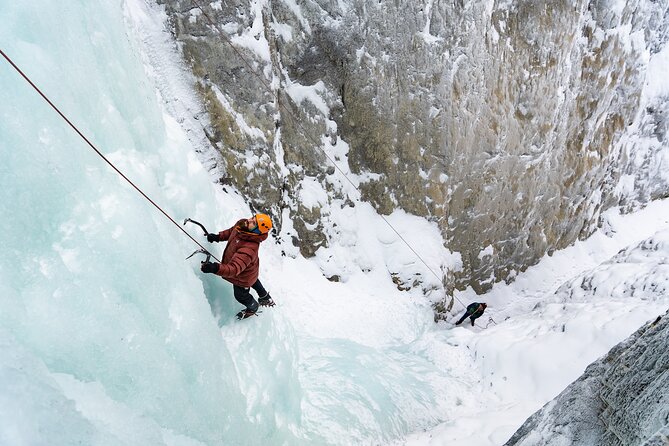
Ice climbing is weather-sensitive by nature, and Banff winter can be intense. There’s a real-life scenario where temperatures hit around -24°C, and the outing got cut short so people could stay safe and still enjoy the activity enough to learn.
So here’s the honest planning mindset: you should go in expecting that the guide team may adjust timing if conditions get extreme. That isn’t bad guiding. It’s smart risk management.
For you, the practical takeaway is simple: treat cold like a major character in your day. Cold affects grip, stamina, and how comfortable you can be while learning technique.
Price and Value at $194.36: What You’re Getting vs. What You’ll Need
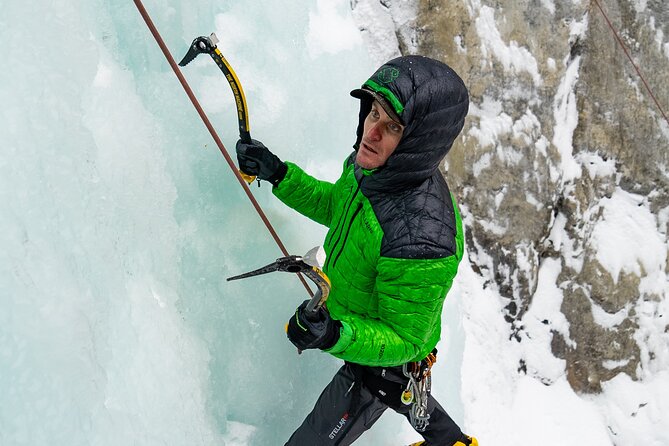
At $194.36 per person for about 7 hours, the value is mostly in two places: professional guidance and included gear. You’re not renting a bunch of equipment and guessing how it all works. You show up, get fit, get taught, and climb with a trained team.
Two costs to watch:
- Lunch isn’t included.
- Private transportation to the climbing site is needed.
Those two items can shape the true total cost. If you’re staying in town and relying on your own logistics, you’ll want to budget for a warm break and plan how you’ll get to wherever the icefall setup ends up being that day.
The small group size (up to 12) also matters. In a sport like this, fewer people means more time and attention per climber.
Who This Beginner Ice Climbing Trip Fits Best
This is a great match if you:
- Are brand new and want structured instruction
- Want to learn safety basics like belaying top rope and site awareness
- Prefer having gear handled and fitted for you
- Like the idea of waterfall ice climbing in the Canadian Rockies without needing prior ice experience
It’s also good if you already climb, because the ice-specific skills (tool use, crampon technique on steep flow, and ice protection concepts like ice screws and V-threads) will feel like a fresh skill set.
I’d think twice if you strongly dislike cold-weather activities or if you expect a schedule that never changes. Winter reality can shorten a day, and you should be okay with that.
Should You Book Ice Climbing in Banff for Beginners?
If your goal is to try ice climbing the right way—gear included, instruction first, safety handled by ACMG/IFMGA guides—then this is a solid booking. You’ll come away with practical climbing skills: crampons, belaying, and real technique on steep ice.
Book it if you’re flexible with weather and ready for a morning start. Don’t book it if you need long, guaranteed on-wall time no matter what the temperature does.
If you do book, do two things early: plan your transport to the climbing site, and bring a mindset that learning happens through teamwork and technique, not brute willpower.
FAQ
What is the duration of the Banff beginner ice climbing experience?
It runs for about 7 hours (approx.).
How much does the tour cost?
The price is $194.36 per person.
Where do I meet, and when does it start?
Meet at 229 Bear St, Banff, AB T1L 1C3, Canada. The start time is 7:45 am, and it ends back at the meeting point.
What gear is included?
All climbing gear is included, including helmet, harness, ice tools, crampons, and climbing boots.
Are lunch or private transportation included?
No. Lunch is not included, and private transportation is needed to get to the climbing site.
What skills will beginners learn?
You’ll cover site safety and awareness, walking in crampons, belaying top rope climbers, and how to move on steep ice using ice tools and your crampons.
How many people are in a group?
This tour/activity has a maximum of 12 travelers.