REVIEW · BANFF
Abraham Ice Bubble/Sunwapta Falls,Snowshoeing,Icefield, Bow&Peyto
Book on Viator →Operated by Rockies Journey · Bookable on Viator
One bubbly lake can change your whole winter. This Banff-area day trip strings together the Icefields Parkway highlights and the chance to see Abraham Lake ice bubbles under frozen blue ice. You also get multiple big-name Rockies stops, with frequent pull-offs for photos and viewpoints that make the long drive feel worth it.
I love how the schedule balances iconic scenery with real time to actually look: Bow Lake and Peyto Lake are quick, focused visits, while Abraham Lake gets longer. I also love the small-group feel (max 24) and the way guides keep things moving without rushing you out of the moment.
The main consideration is simple: it’s a long day. You’ll start early, there’s no lunch stop, and in bad weather the route can change, so flexibility helps.
In This Review
- Key highlights to know before you go
- From Banff to the Icefields: What This Day Trip Really Delivers
- Banff’s Beloved Viewpoints: Cascade, Vermilion Lakes, and Castle Mountain
- Icefields Parkway: The Drive That Becomes Part of the Attraction
- Bow Lake: Turquoise Water and 15 Minutes That Usually Feels Short
- Peyto Lake: The Blue Color Everyone Comes Back For
- Waterfowl Lakes: A Calmer Pause for Photos and Mountain Mood
- Abraham Lake Ice Bubbles in Winter: Timing, Traction, and What to Look For
- When Winter Takes Over: Weeping Wall and Icefield Alternatives
- Sunwapta Falls and Athabasca Falls: Two Waterfalls, Two Speeds of Wow
- Crampons, Hot Drinks, and Guide Support That Keeps You Comfortable
- Price and Value: Why It Costs $68.34, and What You’ll Still Pay
- Who Should Book This Banff Winter Day Trip
- Should You Book This Tour?
- FAQ
- What time does the tour start?
- How long is the day trip?
- How many people are on the tour?
- What’s included, and are any admissions covered?
- Do I need to bring lunch?
- What if Abraham Lake ice bubbles are not part of the day?
- Is free cancellation available?
Key highlights to know before you go
- Abraham Lake ice-bubble season is time sensitive: mid-Dec to early March, with the best odds usually mid-January to early February.
- Winter traction is part of the plan: crampons are included in winter for safer walking on icy surfaces.
- You get more than one glacier-water moment: Bow Lake, Peyto Lake, and Icefields area ice all show up in one day.
- Photography help is built in: guides focus on where to stand and how to frame your shot, and may even help take photos.
- Bring lunch: the tour note is no lunch stop, so plan for your own packed meal.
From Banff to the Icefields: What This Day Trip Really Delivers
This is the kind of tour that works because it saves you from DIY logistics. You’re not just seeing one lake or one waterfall. You’re collecting a set of “wow” moments across the Bow Valley and the Icefields corridor, with guided timing that keeps you from spending your day driving in circles.
The route also gives you a great mix of mountain styles. You get valley views around Cascade Mountain and Castle Mountain vibes, reflections at Vermilion Lakes, and then the Icefields Parkway stretches into glacier country. Even if you’re not a hardcore outdoors person, it’s easy to understand why this corridor is famous.
And yes, the day is packed. That’s the trade. If you want a slow, café-heavy pace, this isn’t that. If you want maximum Rockies per hour, it’s a solid fit.
You can also read our reviews of more tours and experiences in Banff.
Banff’s Beloved Viewpoints: Cascade, Vermilion Lakes, and Castle Mountain
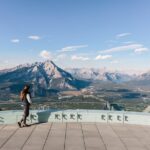
Your day begins with classic Banff scenery stops that set the tone. Cascade Mountain is often the most recognizable peak in the Banff area, and it’s a nice warm-up before the longer Icefields stretches.
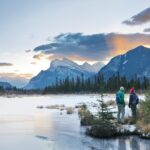
Then there’s Vermilion Lakes, made up of three lakes. The payoff here is the mirror effect: Mount Rundle rises above Banff, and calm water can produce strong reflections. It’s a good early stop when you’re still fresh and your camera batteries haven’t fully died.
Castle Mountain is next, with its “castle-like” look caused by erosion processes. It’s the kind of detail that makes you slow down—because it’s not just pretty, it’s also readable geology.
If you’re arriving in Banff and want instant context for what you’re about to see all day, these stops help.
Icefields Parkway: The Drive That Becomes Part of the Attraction
The big spine of the day is the Icefields Parkway (Highway 93 North) between Banff and Jasper. This isn’t just transportation. It’s one of the most scenic stretches in the Canadian Rockies, and the tour treats it that way.
You’ll also get classic stops along the way, including the Crowfoot Glacier view above Bow Lake. From the Icefields Parkway, you get that “glacier in the distance” effect that still feels huge. It’s not up-close like a full glacier walk, but it’s a memorable first look at the scale of this region.
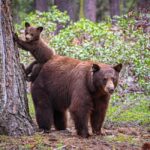
One thing to appreciate here: the Parkway experience is partly about protected habitat and wildlife potential. You might see animals along the road corridor, and it’s a big reason people make the drive even when they’re not planning hikes.
Bow Lake: Turquoise Water and 15 Minutes That Usually Feels Short
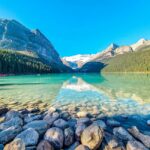
Bow Lake is one of the largest lakes in Banff National Park, and it’s glacier-fed. The striking turquoise color comes from glacial till—tiny rock particles stirred into the water.
You’ll get about 15 minutes at this stop, with admission included. That sounds brief, but it’s enough time to get the view from the viewpoint area, snap photos, and decide if you want a quick extra walk on your own. With a guided group, the schedule matters. Stops like this keep momentum while still delivering the signature color.
If you hate timed photo stops, this might annoy you. If you’re okay with “see it, photograph it, move on,” Bow Lake is a strong early anchor.
Peyto Lake: The Blue Color Everyone Comes Back For
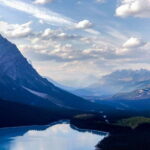
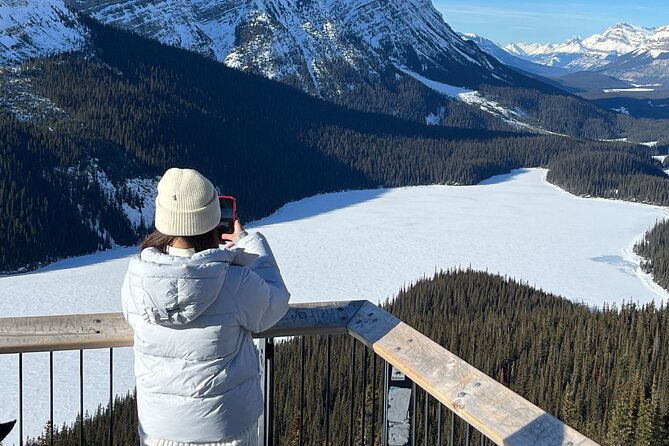
Peyto Lake is glacier-fed and one of the most popular lakes in Banff National Park. The famous blue comes from glacial rock flour that flows in from the Peyto Glacier.
You’ll typically have about 30 minutes here, and admission is included. That extra time helps, because the angle matters a lot. Small shifts in position can change the “wow” factor from good to jaw-drop.
This stop is also a lesson in expectations: winter light can make colors look different than summer photos online. Clouds can soften contrast. Bright skies can make the blue look electric. Either way, Peyto Lake is one of those places where you’ll understand why it’s on almost every Rockies list.
Waterfowl Lakes: A Calmer Pause for Photos and Mountain Mood
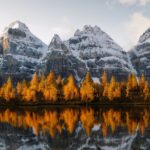
Waterfowl Lakes are another glacier-fed pair of lakes in Banff National Park, framed by mountain scenery. The tour treats this as a breather stop—more relaxed than the glacier corridor feel.
The area is described as a place people enjoy for activities like paddling, hiking, and even stargazing, though your winter timing may be more about viewpoint time and photography. The clear water reflecting peaks is the main reason people stop here.
If you want at least one moment in the day where it feels quieter and less rushy, this is that option.
Abraham Lake Ice Bubbles in Winter: Timing, Traction, and What to Look For
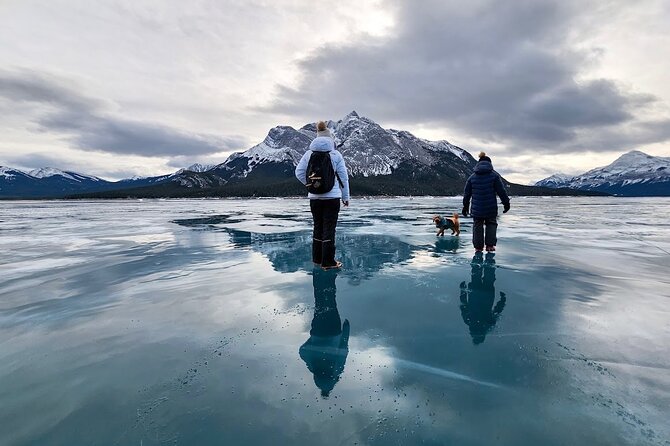
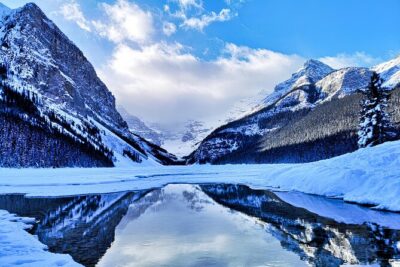
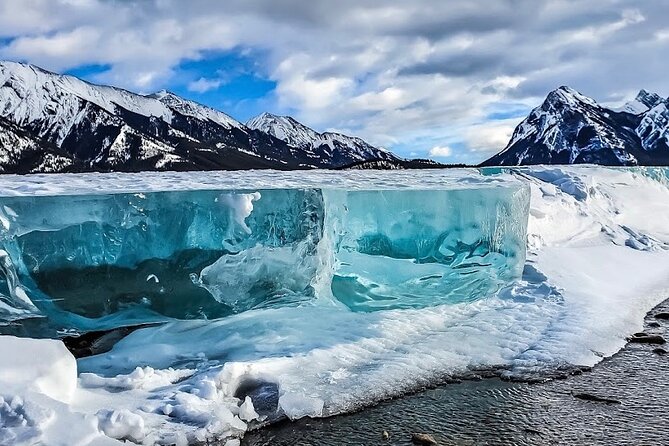
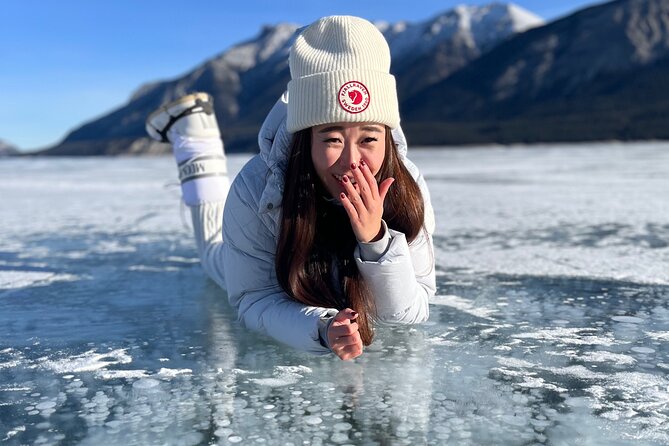
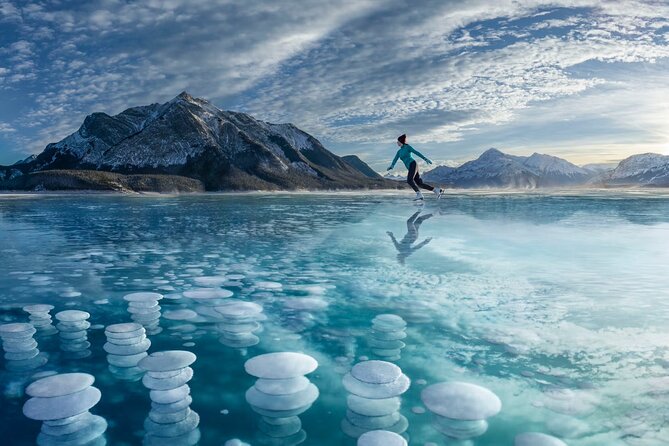
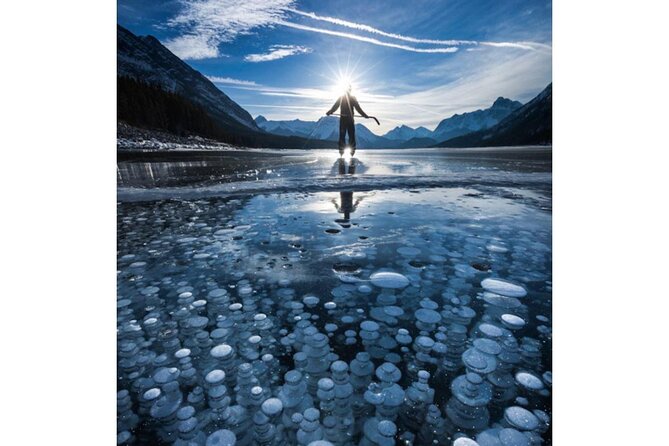
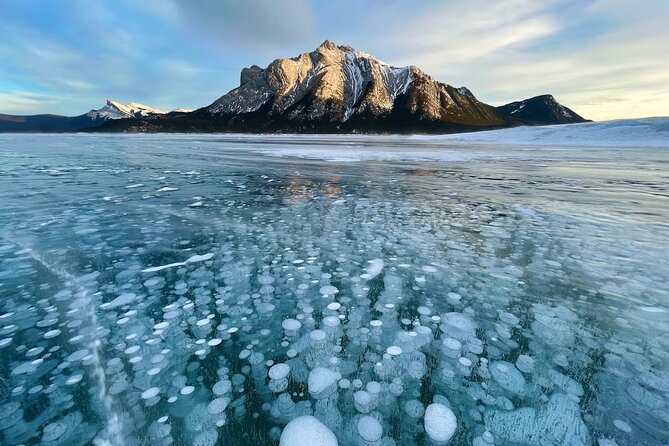
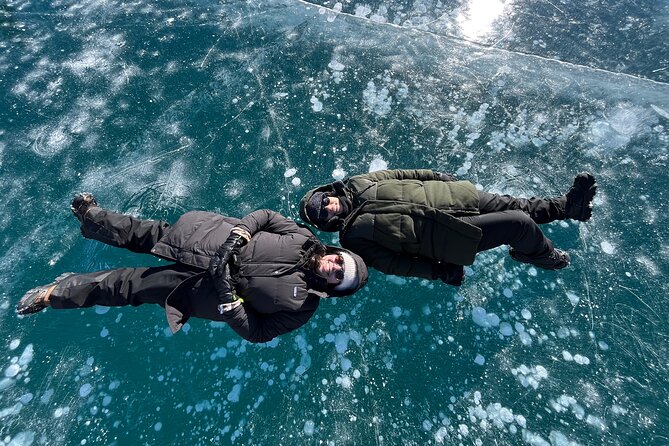
This is the headline experience when conditions line up. Abraham Lake turns into a winter wonder show when its turquoise water freezes and reveals thousands of white bubbles beneath the ice surface.
The tour schedule notes the winter window as roughly mid-December to early March, with the best odds often mid-January to early February. The ice typically forms in mid-December, which is why many people target January for the best bubble chances.
You’ll usually have around 1 hour at Abraham Lake, and admission is free. That hour matters because bubble visibility can vary with weather and light. If the sky is clear, contrast can be stunning. If it’s cloudy or snowing, you may still see the ice texture, but the “wow” can be toned down.
Traction also matters here. In winter, crampons are included, and the guide may help you choose safe footing on steeper or slick patches. One practical tip: treat this like walking on a different surface than normal ice skating. Move slowly, keep your weight centered, and give yourself extra time to line up photos.
If Abraham Lake is your top reason to book, try to plan your travel during that mid-Jan to early-Feb window.
When Winter Takes Over: Weeping Wall and Icefield Alternatives
Weather doesn’t ask permission here. If Abraham Lake isn’t the plan, the tour lists alternatives that still fit the frozen-theme day.
One major option is the Weeping Wall at Cirrus Mountain. It’s described as over 100 meters high (around 330 feet), with waterfalls spilling down the rock face. A prominent waterfall is called Teardrop, and it creates a very recognizable “melting tears” look.
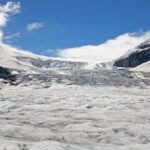
The day can also include glacier and waterfall alternatives connected to the Columbia Icefield area, including the Athabasca Glacier and other stops like Stutfield Glacier. These are timeboxed stops (for example, Athabasca Glacier is listed at 30 minutes with admission ticket included), so you’ll focus on viewpoints and short on-site time rather than a long walk plan.
Then there’s Tangle Creek Falls, another alternative that can be a nice reset from the ice-bubble focus. It’s described as water cascading down rocky cliffs with a distinctive shape.
And yes, because your winter itinerary is flexible, your exact mix depends on conditions.
Sunwapta Falls and Athabasca Falls: Two Waterfalls, Two Speeds of Wow
Water shows up late in the day too, and it’s a good way to end the Rockies “ice-to-water” story arc.
For Sunwapta Falls, you’ll typically get a short stop (about 15 minutes) and the falls are described as roughly an 18-meter drop (around 60 feet). They’re especially impressive in late spring and early summer when melting snow boosts flow, and in winter stops like this may feel more muted depending on conditions—but the viewpoint is still worth it for the sound and power.
There’s also potential for a Goats & Glacier Lookout stop in Jasper National Park as an alternative. It’s a viewpoint with snow-covered mountain views and the Athabasca River below. The notes also mention wildlife potential like mountain goats, and sometimes bears near the picnic area. That means you’ll want to keep your distance and follow guide instructions on where to stand.
Finally, Athabasca Falls can be included as another alternative stop (around 45 minutes). It’s powerful more for water volume than height, with water crashing down into the river below. If you want a “this is moving a lot of water” finale, this is it.
Crampons, Hot Drinks, and Guide Support That Keeps You Comfortable
Cold weather can turn a dream day into a grumpy one fast. This tour fights that with basic comfort features that matter when you’re standing around waiting for the group.
In winter, you get hot drinks, and you’re also given crampons. Bottled water is included, which sounds small but helps when you’re out all day and not sure when you’ll get a chance to refill.
Guide support is a big theme in what people liked most. Names that come up include Lam, Kenneth, and Ray. The common thread is that guides tend to be focused on safety and timing: walking with the group during icy parts, choosing the best photo spots, and keeping you warm with little touches like hot chocolate or tea.
You should also be prepared for bathroom breaks. On a day this long, it’s not optional. A good guide will schedule them without making you feel like you’re holding up the entire tour.
Price and Value: Why It Costs $68.34, and What You’ll Still Pay
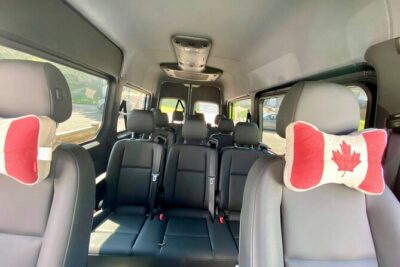
At $68.34 per person, this is one of the cheaper ways to pack this many iconic stops into a single day. The value comes from transportation (an air-conditioned vehicle), a multilingual guide, and included access on some of the key stops.
But you should budget for the extras listed:
- Meals are not included, and you’re told to prepare lunch since there’s no lunch stop.
- Gratuities for the guide are listed as CAD 15 per person.
- The Columbia Icefield Adventure is not included, even though you may spend time at the Icefields area.
So the real cost equation is: tour price plus your packed lunch plus gratuity if you choose. If you were planning to rent a car, pay for separate admissions, and drive yourself between Banff and the Icefields corridor, the guided version can feel like a bargain.
Who Should Book This Banff Winter Day Trip
This tour is a great match if you:
- Want the Icefields Parkway in one day without planning a drive route
- Are traveling without a car and still want glacier, lake, and waterfall variety
- Like winter experiences, including traction walking with crampons
- Want a guided group pace that still gives time at the best photo stops
It may not be ideal if you:
- Hate long days and early starts
- Need frequent full meal stops (there isn’t one)
- Get very stressed by weather changes, since the itinerary can adjust based on conditions
Also, max group size is 24, which usually means you’ll get enough personal space for photos without feeling like you’re in a massive cattle line.
Should You Book This Tour?
If your goal is to see Abraham Lake ice bubbles, Bow Lake, Peyto Lake, and Jasper-area waterfalls in one efficient day, I’d book this. The combination is hard to replicate yourself without serious driving and planning.
Do it with two expectations: it’s a full, long day; and weather can adjust the exact mix. Pack lunch, dress for traction walking, and bring patience for the cold wait-times at viewpoints.
If you’re in Banff and want a true Rockies highlight sampler, this one checks the boxes.
FAQ
What time does the tour start?
The tour starts at 7:00 am.
How long is the day trip?
It runs about 11 to 12 hours (approx.), and the time includes travel. From Banff specifically, the total tour duration is around 10 hours.
How many people are on the tour?
The maximum group size is 24 travelers.
What’s included, and are any admissions covered?
Included items are an air-conditioned vehicle, bottled water, hot drinks in winter, a multilingual guide, crampons in winter, and GST. Admission ticket is included for Bow Lake and Peyto Lake, and Abraham Lake is listed as free.
Do I need to bring lunch?
Yes. There is no lunch stop, so you should prepare a packed lunch.
What if Abraham Lake ice bubbles are not part of the day?
In winter, the plan lists alternatives such as the Weeping Wall, Athabasca Glacier, Stutfield Glacier, Tangle Creek Falls, and other Jasper-area viewpoints like Sunwapta Falls.
Is free cancellation available?
Yes. You can cancel up to 24 hours in advance for a full refund.