REVIEW · BANFF
Town of Banff Highlights 2 Hour Walking Tour | Gratuity-Based
Book on Viator →Operated by Toonie Tours Calgary · Bookable on Viator
Two hours, and Banff feels mapped. This gratuity-based Banff walk lines up the town’s best-known sights with story-telling history, all at an easy pace.
I especially like that it mixes classic Banff postcard spots with small-town details you’d miss on your own, and you start and finish at the Banff Visitor Centre.
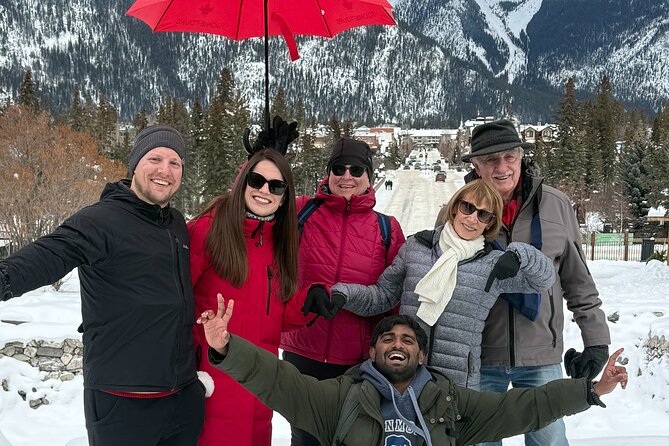
The second big win for me is the guide energy. On my watch list are guides like Azim, who brings humor and helps with photos, and Jess, who keeps the walk moving at a comfortable speed while also pointing out practical things you’ll thank yourself for later. Plus, you get recommendations for food, entertainment, and nightlife.
One thing to consider: it’s still a walking tour. If you have trouble standing or walking for long stretches, this probably won’t feel great over the full 2 hours.
In This Review
- Key Highlights That Matter
- Why This Banff Highlights Walk Works So Well
- Price, Gratuities, and What You’re Really Paying For
- Meeting at Banff Visitor Centre: How the 2 Hours Are Built
- Banff Avenue: Getting the Big Picture in 15 Minutes
- Bow River Trail: Stories While You Walk the Calm Side
- Cascade of Time Garden: A Photo Stop With a Purpose
- Bear Street: The Walkable-Streets Stage for Local Tips
- Banff Train Station: An Often-Missed Piece of Town History
- Banff Park Museum: National Historic Site, Without the Overwhelm
- Historic Luxton Home Museum: Short Stop, Local Feeling
- Getting More From the Walk: My Practical Tips
- Who This Tour Fits Best (And Who Should Skip It)
- Quick Call: Should You Book Town of Banff Highlights?
- FAQ
- How long is the Banff walking tour?
- How much does the tour cost?
- Is the tour in English?
- Where does the tour start?
- What time does it run?
- Where does the tour end?
- How many people are in the group?
- What is included in the tour price?
- Are admission tickets included for the stops?
- Is gratuity included in the price?
- FAQ
- What should I know about cancellation?
- Is the tour suitable for everyone?
- Do I need a paper ticket?
- Is this tour near public transportation?
Key Highlights That Matter
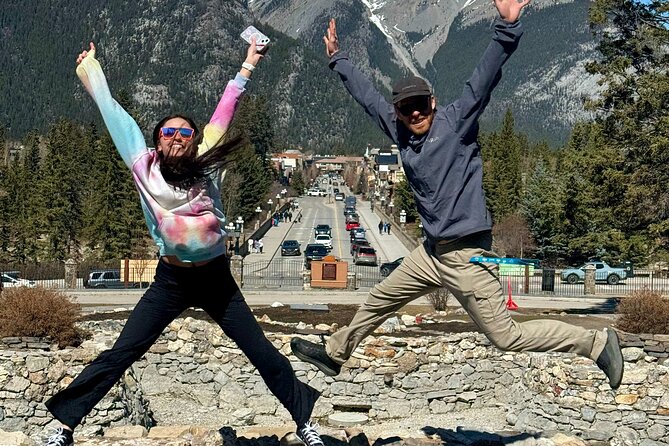
- Banff Avenue in 15 minutes: quick context so you know where you are and why the streets look the way they do
- Bow River Trail storytelling: a calmer riverside walk tied to how the townsite formed
- Cascade of Time Garden stop: an artful flower-and-tree moment that gives your photos more than scenery
- Bear Street and small-street tips: the kind of local recommendations that save you time later
- Banff Train Station and Park Museum: history that rounds out Banff beyond views
- Luxton Home Museum for a short local taste: a smaller stop that helps the tour feel like more than main streets
Why This Banff Highlights Walk Works So Well
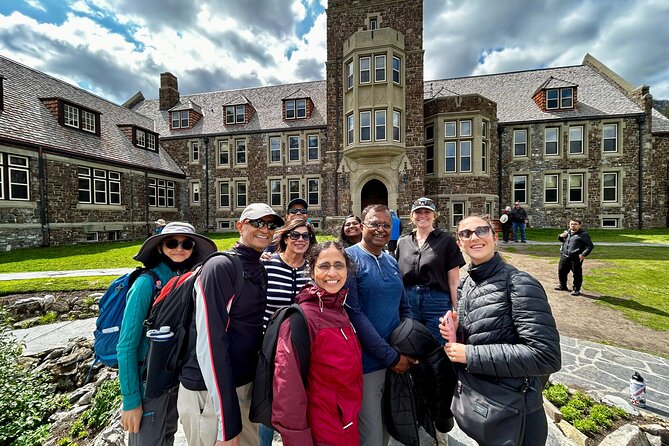
This tour is built for a specific job: helping you get your bearings fast. Banff Avenue and the river area are easy to spot on a map, but it’s the connections—what happened first, and why the town grew where it did—that make the walk feel satisfying. In about two hours, you get a tidy overview without turning the day into an all-day project.
It also has a nice “watch and listen” rhythm. Each stop is timed tightly, so you get enough time to see what matters, hear the story, and still keep moving. That’s great if you’re the type who wants photos and context, not a schedule that drags.
And you’re not paying for entry after entry. Several stops are listed as admission ticket free, which matters when you’re trying to keep a trip budget under control. The guide does the heavy lifting on the history and the where-to-next suggestions, so you leave with both memories and a plan.
You can also read our reviews of more walking tours in Banff

Price, Gratuities, and What You’re Really Paying For
At $5 per person, the price is the least complicated part. The tour is clearly set up as a value-friendly “do this early” activity, especially if you’re only in Banff for a short stay.
Here’s the fine print you should know: it’s gratuity-based. That means the money you pay here includes booking fees, and your guide’s pay is tied to gratuities. In plain terms, you’re not just buying two hours of sightseeing—you’re supporting a local person who’s been through the effort of assembling stories and recommendations for your group.
So how should you think about value?
- If you want a quick history-and-lay-of-the-land orientation, this fits.
- If you’re expecting a private, slow-motion deep museum day, it won’t match that.
- If you like walking with a guide who talks in a natural way (not a script), this is a good match.
The best part is that your “perceived cost” can actually drop with smart timing. Doing this near the start of your Banff trip helps you spend your next days better—less wandering, fewer wrong turns, and more time on what you’ll care about.
Meeting at Banff Visitor Centre: How the 2 Hours Are Built
The tour meets at Banff Visitor Centre, 224 Banff Ave, and it ends back at the same place. It starts at 10:00 am, runs about 2 hours, and it caps at 30 travelers. That cap matters more than you’d think in Banff. Smaller groups keep it easier to stop, look up, and hear the guide without turning into a school field trip.
You’ll also get a mobile ticket, which is a small comfort on a travel day. It means less paper juggling and more time focused on what’s in front of you.
Also check the practical side: this is listed as not recommended if you have difficulty walking or standing for long periods. Even if the stops are short, the tour is still a continuous walk. Plan for comfortable shoes, and don’t schedule this when your legs are already cooked from something intense.
Near public transportation is a bonus if you’re mixing this with other Banff plans.
Banff Avenue: Getting the Big Picture in 15 Minutes
Banff Avenue is the obvious starting point for a reason. It’s where visitors naturally begin, and it’s where the town’s story becomes visible in the street shape, the architecture, and the way people move. In 15 minutes, the guide points out the “why” behind what looks familiar.
This is the stop that gives you orientation. After this, you’re less likely to feel like you’re walking in circles. You start recognizing corners, landmarks, and the general flow of Banff. That’s a quality-of-life thing. When you understand the layout, your later self-directed wandering feels calmer and more intentional.
It’s also a good opening stop because it doesn’t rely on you having a museum mindset. You can just show up, look around, and listen. If you’re someone who likes history but gets bored by long explanations, this format helps.
Possible downside: since the time is tight, you won’t get a super detailed walk-through of every building. The goal here is awareness, not expert-level architecture class.
Bow River Trail: Stories While You Walk the Calm Side
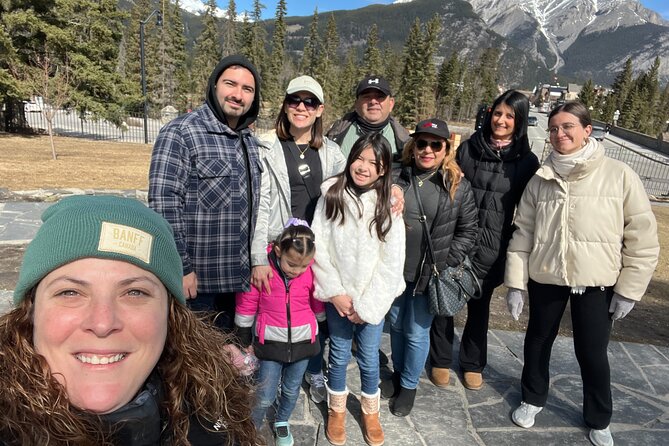
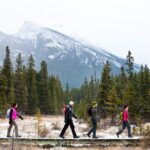
Next comes the Bow River Trail for about 20 minutes. This is where the tour slows down in mood, if not in pace. River areas often do two things at once: they give you space to breathe, and they give you a natural “timeline” for the town’s growth.
The guide shares tales of how the Banff townsite came to be. That kind of context works well on a riverside walk because you can connect the physical setting to the human story. You’re literally moving through the same kind of geography that shaped decisions.
For practical enjoyment, I like this stop because it’s not just “look at water.” It’s a reset from the busiest streets. Even if you’re taking photos, you’ll likely feel less rushed than you do right on Banff Avenue.
A consideration: if your day is windy or chilly, a riverside walk can feel longer than you expect. Wear layers and don’t assume you’ll only feel weather at the start.
You can also read our reviews of more tours and experiences in Banff
Cascade of Time Garden: A Photo Stop With a Purpose
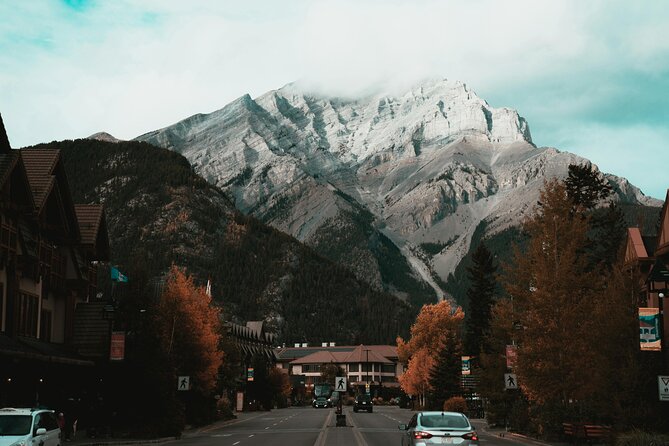
Then you hit Cascade of Time Garden for about 20 minutes. Gardens sound like filler until you realize this one is timed for a reason: it gives you a visual pause, and it adds texture to the town story beyond streets and buildings.
The description focuses on ornate flowers and trees that brighten up the area. Translation: it’s a strong color and detail stop, and it tends to work well for photos. But it’s also a chance to slow your brain down. A guided tour can become mental noise if you’re constantly collecting facts. A garden break helps you store the trip in your memory, not just in your phone.
Downside? If you’re not into gardens, you may find this is your “skip it later” stop. The good news is that the time is reasonable, and the guide’s storytelling keeps it from feeling like you’re just standing around waiting for the group.
Bear Street: The Walkable-Streets Stage for Local Tips

Bear Street is the next 15-minute stop, and this is where the tour gets practical. The guide weaves through small, walkable streets and shares tips and recommendations to make your stay in Banff worthwhile.
This is a big reason I like this tour: the guide doesn’t just provide facts. You also get the kind of travel input that saves time and reduces decision fatigue. Once you know what areas make sense for your interests, your independent exploring becomes easier.
If you’ve ever arrived somewhere and realized you spent two days chasing the obvious spots, you’ll appreciate this stop’s intention. It’s geared toward helping you turn “I’m in Banff” into a real plan.
Possible drawback: because this stop is recommendation-focused, the value depends partly on how much you’re willing to ask questions. If you’re quiet and don’t engage, you’ll still get the walk and stories, but you might not capture as much of the planning benefit.
Banff Train Station: An Often-Missed Piece of Town History
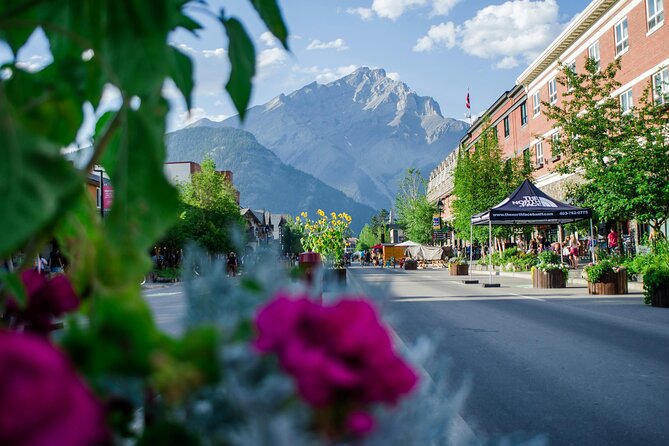
After Bear Street, you’ll head to Banff Train Station for about 15 minutes. Train stations are one of those places you can pass without truly seeing. A short stop here makes sense because it adds a key piece of Banff’s growth story—how people arrived, how goods moved, and why the town mattered beyond its immediate surroundings.
The guide shares its historical impact on the town. This is a nice pivot from the “walking streets” feel. It helps explain why certain parts of Banff developed when they did.
I also think this is a smart stop for photo lovers. Stations tend to give you that mix of architecture and history, and they often photograph well without needing perfect lighting.
Downside: with only about 15 minutes, you’ll learn enough to appreciate it, but you won’t leave with deep technical knowledge. Plan to come back if you want a longer look.
Banff Park Museum: National Historic Site, Without the Overwhelm
Next is Banff Park Museum, also about 15 minutes. The key detail here is that it’s described as a National Historic Site and that the guide’s stories bring it to life.
This is a good stop if you want museum-style info but don’t want to commit to a full museum session. You get a guided “starter pack” that helps you understand what you’re looking at and why it matters in the Banff story.
If you tend to bounce off museums when you’re tired, this guided timing can help. The guide keeps the flow moving and helps you focus on what’s most meaningful.
A consideration: museums can involve indoor time and benches/standing depending on how the group navigates. If you’re sensitive to long standing indoors, keep that in mind while dressing.
Historic Luxton Home Museum: Short Stop, Local Feeling
The tour then finishes with Historic Luxton Home Museum for about 10 minutes. This is described as a place that feels like a local secret—short, specific, and less obvious than the big mainstream stops.
I like a short museum ending because it closes the tour with a different flavor. You’ve seen the streets, the river, the station, and the museum area. A small home museum gives you a more intimate angle on the story of Banff—how people lived, not just how the town infrastructure developed.
Possible downside: because it’s only 10 minutes, you won’t get the full experience if you’re the kind of visitor who wants to read everything at your own pace. Treat it like a taste. If you like it, you’ll have the motivation to return later and go slower.
Getting More From the Walk: My Practical Tips
Even if the tour does the storytelling work, you still control how much you get out of it. Here’s how I’d set yourself up for success.
Wear real walking shoes. This is a walking route, and Banff weather changes fast. If your shoes are borderline, the tour might feel longer than planned.
Keep your phone charged. The itinerary includes multiple photo-friendly spots (garden and train station are strong bets), and guides like Azim are known for helping with pictures.
Plan your questions. The guide provides recommendations for food, entertainment, and nightlife. If you ask what neighborhoods make sense for your vibe, you’ll turn this tour into a more useful guidebook in real time.
Use the tour early in your trip. You’ll get a better payoff when you can act on what you learn the next day. The orientation effect is the hidden value: once you know the town flow, everything else gets easier.
Be ready for short stops. Times are tight—15 to 20 minutes here and there. If you want to linger, do it in your own time after the tour ends. That way you avoid slowing the group down.
Who This Tour Fits Best (And Who Should Skip It)
This is ideal if you want:
- A quick 2-hour introduction to Banff that helps you navigate the town
- Guided history at an easy pace (street-to-stories-to-landmarks)
- Practical recommendations for where to go next for meals and evenings
- A low-cost orientation that doesn’t require buying separate attractions one by one
It’s less ideal if you:
- Have difficulty walking or standing for long periods
- Prefer long, self-paced museum time over short guided stops
- Want a deep dive into one specific topic (this tour covers many stops in a short window)
Also note the group size cap of 30. If you like quieter, smaller exchanges, you might still find it comfortable, but it won’t feel like a one-on-one private tour.
Quick Call: Should You Book Town of Banff Highlights?
Yes—if you’re in Banff for a short stretch and want both orientation and stories, book it early. The $5 starting price is hard to ignore, and the guide-led format gives you immediate value even if you’re not “a museum person.”
Hold off if your body hates walking. Even though stops are short, you do spend meaningful time on your feet, and the tour is explicitly not recommended for visitors who have trouble walking or standing for long periods.
If you do book, do one thing that turns this from nice to smart: come with comfortable shoes and a couple of questions about where you should spend your evenings. That’s where the guide’s tips can make your trip feel smoother right away.
FAQ
How long is the Banff walking tour?
It lasts about 2 hours.
How much does the tour cost?
It costs $5.00 per person.
Is the tour in English?
Yes, it’s offered in English.
Where does the tour start?
It starts at the Banff Visitor Centre, 224 Banff Ave, Banff, AB T1L 1B3, Canada.
What time does it run?
It starts at 10:00 am.
Where does the tour end?
It ends back at the meeting point (the Banff Visitor Centre).
How many people are in the group?
The tour has a maximum of 30 travelers.
What is included in the tour price?
A local English-speaking guide, passionatly researched history, and recommendations for the best food, entertainment, and nightlife are included.
Are admission tickets included for the stops?
Admission ticket access is listed as free for the stops described.
Is gratuity included in the price?
No. Gratuities are not included, and the tour is gratuity-based.
FAQ
What should I know about cancellation?
Free cancellation is available. You can cancel up to 24 hours in advance for a full refund.
Is the tour suitable for everyone?
Most travelers can participate, but it’s not recommended for travelers who have difficulty walking or standing for long periods.
Do I need a paper ticket?
No. A mobile ticket is used.
Is this tour near public transportation?
Yes, it’s listed as near public transportation.