REVIEW · ALBERTA
Discover the Lake Agnes Tea House Trail with an Audio Nature Tour
Book on Viator →Operated by Tripvia Tours · Bookable on Viator
Your phone turns the Lake Agnes hike into a guided trip. I love the private audio format (no strangers, just your group) and I love that it works offline once you download it. One thing to keep in mind: you’re relying on your device—if the app or audio glitches, you’ll still be hiking, just without the full guidance.
This is a 7 km, mostly uphill day out of Lake Louise. It’s doable for many people with moderate fitness, but plan for a steady climb and a rockier feel near the top. If you’re hoping for a casual stroll, set expectations now.
Key points to know before you go
- Private by design: only your group uses the tour, and you can download for multiple devices.
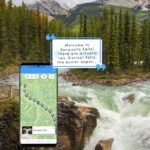
- Offline GPS + auto audio: download on Wi‑Fi, then follow the live map with commentary that plays as you near stops.
- Low-price, high guidance: $8.22 per person for a full, commentary-led hike experience.
- Trivia and a location game: it’s not just listening—you’ll tap answers along the way.
- Trail realities: it’s described as relatively smooth, but you’ll still feel the climb and can hit rocky spots toward the end.
In This Review
- Lake Agnes Tea House Trail with Audio: a different way to see Lake Louise
- Price and value of this $8.22 private audio hike
- Download on Wi‑Fi: the offline GPS system that saves your hike
- How the 7 km trail holds up in real life
- Stop-by-stop guide: from Fairmont Lake Louise to Lake Agnes Tea House
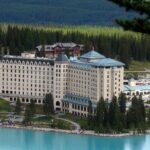
- Stop 1: Fairmont Chateau Lake Louise — start with the trail narrative
- Stop 2: Lake Louise — blue water and a place-name clue
- Stop 3: Victoria Glacier — the backdrop explained
- Stop 4: Banff National Park — big-picture context
- Stop 5: Banff’s Boreal Biome — pay attention to the trees
- Stop 6: Wildlife Crossing — those “spectacles” bridges
- Stop 7: Lake Louise + switchbacks — find the turquoise glimpses
- Stop 8: Castleguard Cave — you might not see it, but you’ll hear about it
- Stop 9: Wildlife — numbers that make the park feel alive
- Stop 10: Mirror Lake — the reflective break
- Stop 11: Lake Agnes Tea House — your payoff moment
- Stop 12: Lake Agnes — the high-elevation viewpoint
- Stop 13: Caste Mountain — the Trans-Canada photo landmark
- Stop 14: Mountain Peaks — differences you can try to spot
- Stop 15: Indigenous people — evidence of long presence
- Stop 16: Recreational in Banff National Park — hiking as the obvious answer
- Stop 17: Lake Louise and Glacial Melting — seasonal explanation
- The audio tricks: autoplay, trivia, and how to keep it from annoying you
- Should you bring gear or just show up?
- Who this private Lake Agnes audio tour fits best
- Book this tour? My practical recommendation
- FAQ
- How long is the Lake Agnes Tea House Trail audio tour?
- Is this a private tour or will I share it with other people?
- Do I need cell service during the hike?
- Does the tour include live GPS navigation and autoplay audio?
- Are headphones provided?
- What language is the tour in?
- What if I cancel?
Lake Agnes Tea House Trail with Audio: a different way to see Lake Louise
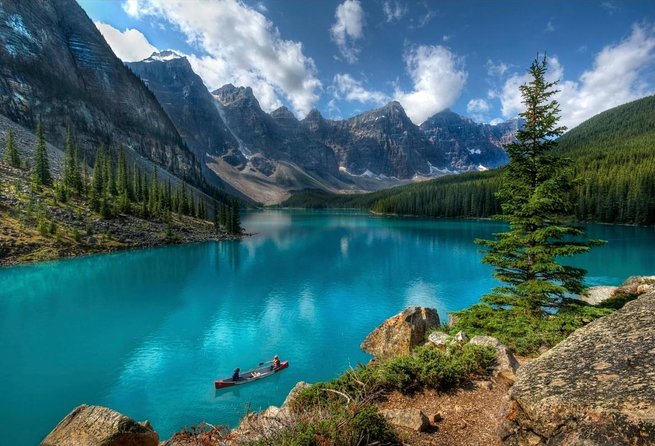
Banff’s Lake Louise area can feel busy fast. This tour changes the vibe. Instead of joining a group and matching their pace, you move at your speed while a professional-style nature guide talks through your smartphone as you reach each point of interest.
The big win is how guided it feels without being crowded. You get live GPS to keep you on track, and you get audio that automatically starts when you’re close to each stop. That combination is great if you want the “I’m being guided” feeling, but you don’t want the tight timing and herding that can come with traditional tours.
And yes, it’s still the real Lake Agnes Tea House trail—views, switchbacks, and that feeling of getting higher above the lake. The difference is what you hear along the way: glacier facts, wildlife context, and place-name snippets that help you understand what you’re looking at.
Price and value of this $8.22 private audio hike
At $8.22 per person, this is priced like an add-on, not a full-day guiding service. And that’s exactly how it feels: you’re paying for the structure and the story delivered through an app.
Here’s why the value can be strong:
- You’re not paying for a big vehicle or a group guide’s time. You’re paying for the audio content, GPS guidance, and interactive bits (trivia/game).
- You can go when you want within the listed hours. The experience is open daily, from 12:00 AM to 11:30 PM, which is handy in a place where daylight and weather can drive your plans.
- Once it’s downloaded, it’s yours to keep in the Tripvia Tours app. That matters if you want to re-listen or revisit the route later.
The tradeoff is also clear: because it runs through your smartphone, the experience’s quality depends on your device and audio setup. One person found the app didn’t work, and another said the audio cut in and out often—annoying enough that they kept fussing with their phone. So think of it as “high value if it works smoothly,” and plan a simple backup.
You can also read our reviews of more tours and experiences in Alberta
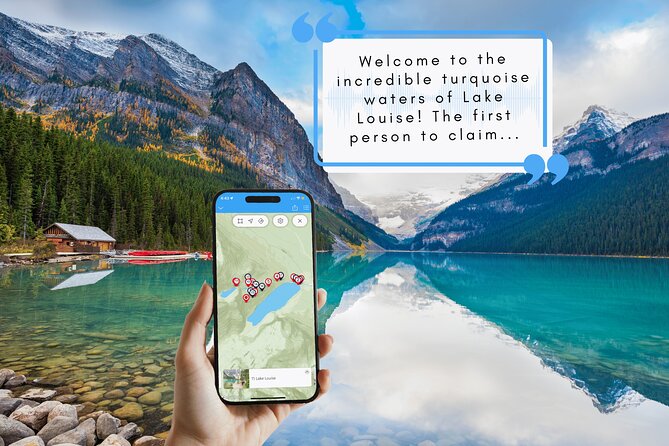
Download on Wi‑Fi: the offline GPS system that saves your hike
This is one of the most practical parts of the tour. You download on Wi‑Fi before you start, and after that, no signal and no data are required.
That’s huge in Banff because:
- phone coverage can be inconsistent in parts of the valley and along hiking corridors
- you don’t have to burn your data plan while walking
- you’re less stressed about whether your map will disappear mid-trail
Plan it like this:
- Download before you leave the hotel/parking area.
- Bring your phone fully charged (and ideally a power bank if you’re using battery-hungry GPS).
- Have a quick way to control sound on your phone since the tour is audio-based.
One more practical note: headphones aren’t provided. The audio can play through your device speaker, but if you want it clearer over wind and foot traffic, bring your own headphones.
How the 7 km trail holds up in real life
The route is listed as a 7 km hike to the Tea House, and it’s described as “relatively smooth.” That said, set your expectations for uphill effort. The route is part of the Lake Louise hiking network, and the commentary is built around switchbacks and rising viewpoints.
From experience-style feedback on this hike format, I’d plan for:
- a steady climb the whole way up
- a top section that can feel rockier than you’d expect
This matters because the tour is marketed for people with moderate physical fitness. If your knees or breathing don’t love long inclines, consider a different day plan—or at least start early, pace slowly, and use the audio stops as built-in rest moments.
Stop-by-stop guide: from Fairmont Lake Louise to Lake Agnes Tea House
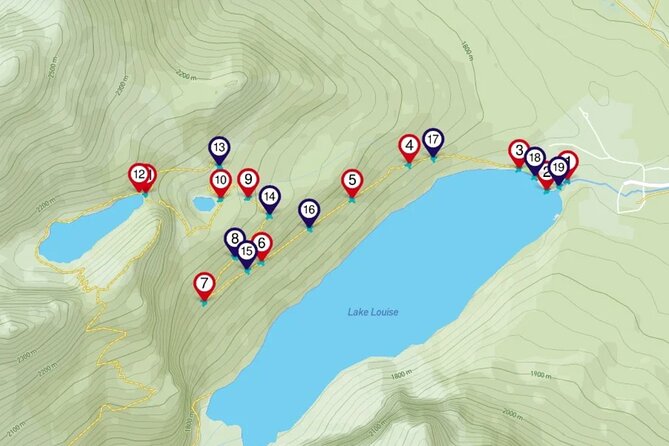
The tour is made of short “chapters.” Each stop is tied to a view or a feature, and you get guided commentary plus optional trivia. Most stops are only a few minutes, which makes it feel manageable even when you’re climbing.
Below is what you can expect at each named stop, and how to get the most from it.
Stop 1: Fairmont Chateau Lake Louise — start with the trail narrative
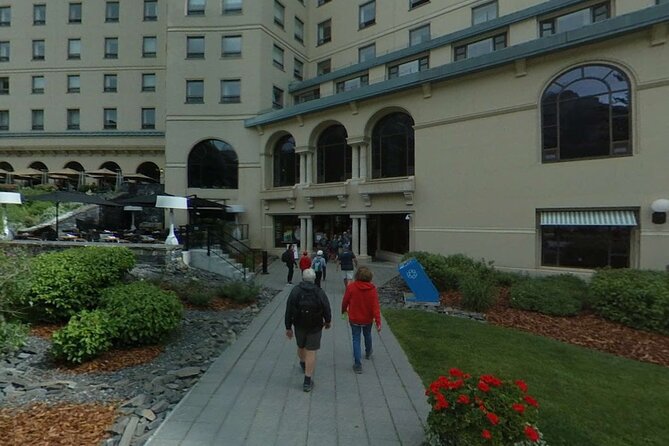
You begin at 111 Lake Louise Dr, Lake Louise, AB, at the Fairmont Chateau Lake Louise area. This is where your smartphone becomes your guide.
You’ll start the hike with commentary that sets up the trail—animals, plants, and some local context. It also includes a fun extra: after the audio plays, you’ll look at your device and tap your guess for a location game question.
Practical tip: on the first stretch, keep your eyes up. You’re starting in a famous part of the valley, but it’s easy to stare at your screen right away. Let the audio guide you while you still get your bearings fast.
You can also read our reviews of more tours and experiences in Alberta
Stop 2: Lake Louise — blue water and a place-name clue
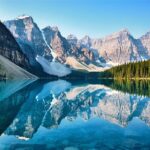
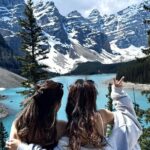
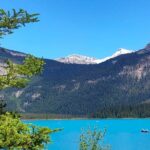
As you wind along, the “big reveal” view comes: a bright mass of blue water framed by mountains. You’ll also hear a place-name detail connected to the Nakoda (Nah-koh-dah) people, described in the Stoney language as the area being called Lake of Little Fishes.
This kind of stop is valuable because it turns the view from a postcard shot into a meaning-filled moment. You’re not just seeing water—you’re learning how people have named and related to it.
Stop 3: Victoria Glacier — the backdrop explained
You’re told about the Victoria Glacier, which forms a dramatic backdrop to the Lake Louise vista.
Even if you don’t love geology, this stop is worth staying present for. It helps you understand what you’re looking at when the mountains feel like a painted wall of rock and ice.
Stop 4: Banff National Park — big-picture context
Next up is a quick history and significance moment about Banff National Park, noted as Canada’s oldest national park (established in 1885) and the third oldest in the world.
This is the kind of stop that makes the rest of the walk feel more grounded. You start connecting the trail to the protected-area story around it.
Stop 5: Banff’s Boreal Biome — pay attention to the trees
As the trail rises, the forest thickens and you’re guided through the idea of Banff’s boreal biome—sometimes called a boreal forest.
Don’t rush this part. Look at the mix and feel of the woods. Audio helps you notice patterns you might otherwise walk past.
Stop 6: Wildlife Crossing — those “spectacles” bridges
This stop explains the wildlife crossings you might see from driving through the park: bridges and underpasses with trees and grass on top that look like a large pair of spectacles.
If you’re also doing scenic drives around Banff, this stop is extra satisfying because it ties road sightings to what you’re learning on foot.
Stop 7: Lake Louise + switchbacks — find the turquoise glimpses
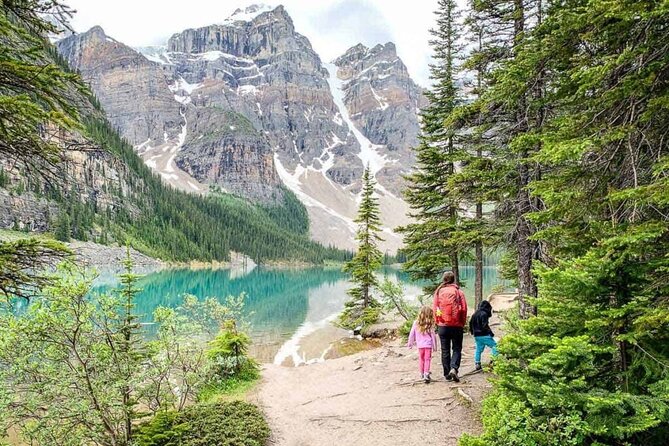
You’ll hit the first of many switchbacks, built to reduce the incline. Before each turn, you can catch glimpses of Lake Louise’s turquoise water through the trees.
This is one of the stops where you’ll want to slow down. Switchbacks are perfect “small pauses.” Use them for water, quick photo checks, and letting the audio land.
Stop 8: Castleguard Cave — you might not see it, but you’ll hear about it
You won’t see it on this exact hike, but the tour includes a spoken reference to Castleguard Cave and caves in Banff National Park.
Even when you don’t visit the feature directly, this kind of stop can make you more curious about the wider park. It’s a reminder that Banff has subsurface geology too.
Stop 9: Wildlife — numbers that make the park feel alive
Here the guide focuses on wildlife variety: up to 310 different species of birds and 840 species of plants are mentioned, with more detail hinted beyond that point.
This is where the tour helps you shift from “I’m walking through scenery” to “I’m moving through habitat.”
Stop 10: Mirror Lake — the reflective break
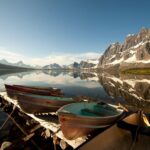
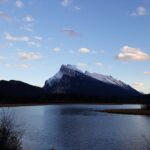
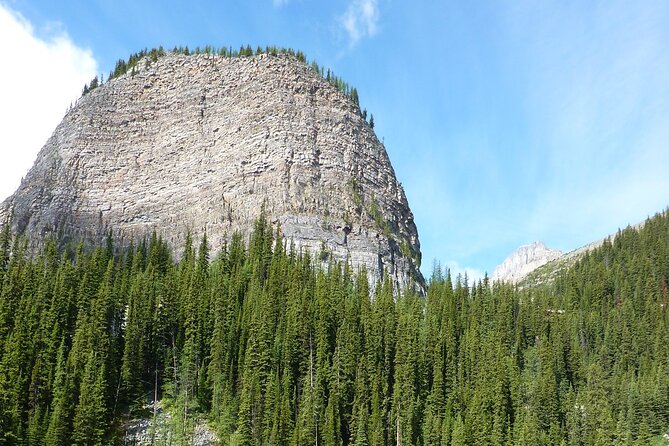
You reach Mirror Lake, described as small but picturesque and one of the only stops along the way to the Tea House. Across the water, you may see Big Beehive Peak, known for something the audio promises to explain.
This is a natural pacing moment. If the climb is getting to you, this stop can feel like a reset.
Stop 11: Lake Agnes Tea House — your payoff moment
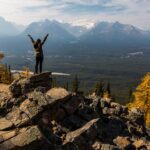
This is the big arrival. You crest wooden stairs for the final ascent and the audio points you toward the Lake Agnes Tea House setting, with waterfall views in the described atmosphere.
If you’re here for the classic Lake Agnes experience, this is where the trail reward makes sense. The Tea House area is where photos start being easier and everyone’s energy usually rebounds.
Practical note: you’re still hiking before and after this stop. Don’t overstay so long you feel rushed on the descent.
Stop 12: Lake Agnes — the high-elevation viewpoint
You take in the view at 7,005 feet looking out over Lake Agnes. You’ll also hear that Mount St. Piran is visible to your right, and the audio teases more if you’re feeling energetic.
This is the spot for a slower walk, longer pause, and “let your eyes adjust” time. Higher altitude changes how fast you feel the air and how quickly wind cools you.
Stop 13: Caste Mountain — the Trans-Canada photo landmark
You’ll learn about Castle Mountain, described as a unique mountain you might notice from the Trans-Canada highway, known for a long and distinctive façade.
This stop is helpful for future drives. Even if you didn’t plan to watch the road closely, the audio connects today’s view to tomorrow’s memories.
Stop 14: Mountain Peaks — differences you can try to spot
On the way back down, the tour keeps guiding with mountain peaks and asks you to compare differences as you move.
This is a smart use of return time. Instead of focusing only on “getting down,” you stay present and practice seeing the terrain as a set of different forms.
Stop 15: Indigenous people — evidence of long presence
This stop shifts to people and time, with a mention of evidence of humans in Banff National Park dating back as far as 10,000 years. The audio continues with more details not included in the provided text, but it’s clearly framed as a deep-time context stop.
It’s one of the more meaningful listening moments in the entire walk because it expands the story beyond visitors and explorers.
Stop 16: Recreational in Banff National Park — hiking as the obvious answer
You’ll hear about recreation in Banff National Park, with hiking called out as one of the first outdoor activities people think of.
It’s simple but useful because it grounds your own plan in the park’s bigger outdoor-life culture.
Stop 17: Lake Louise and Glacial Melting — seasonal explanation
As you return to Lake Louise’s shore, the audio addresses glacial melt and mentions subzero winter temperatures and how winter affects the lake.
This is a good listen if you’re wondering why the lakes look different through the seasons. It helps you connect today’s hike to what the area does in cold months.
The audio tricks: autoplay, trivia, and how to keep it from annoying you
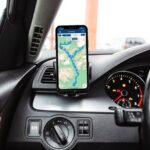
This tour works in a pretty specific way: commentary automatically plays when you get close to each stop, aided by a live GPS map showing where you are and where to go next.
That’s ideal for hands-free hiking. But if GPS accuracy is spotty on your phone, autoplay can feel jumpy. One piece of feedback noted audio that kicked in and out, causing the person to adjust their phone.
To reduce that risk:
- Stand still briefly when you reach a stop marker area.
- Keep your phone screen brightness reasonable so you can see prompts without draining battery.
- If audio becomes unreliable, be ready to play the audio manually from the app at each stop.
The trivia questions are described as optional at each stop, plus the location game early on. That means you can treat the tour as either mostly listening or mostly playful. If you’re tired, turn the trivia/game moments into short breaks and then go back to enjoying the view.
Should you bring gear or just show up?
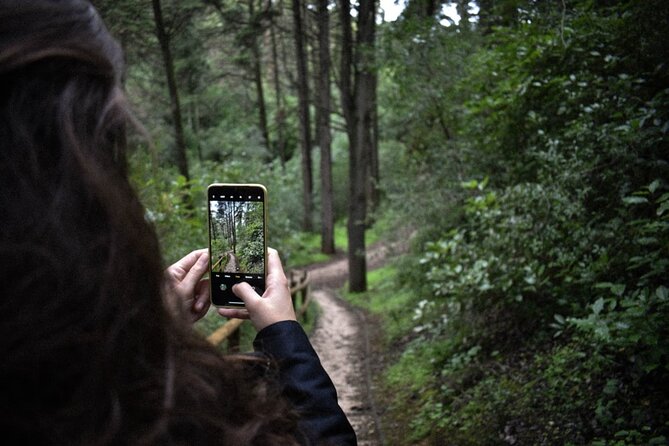
The tour does not include a smartphone or headphones, so plan around the essentials of a guided hike-by-app.
At minimum:
- smartphone with enough battery for GPS and audio
- personal headphones if you don’t want to use your speaker
- water and a layer for mountain weather shifts
Also, because the hike is mostly uphill and gets potentially rocky near the top, bring shoes that grip. This is a “good shoes” route, not a sandals-and-socks moment.
And remember: there are recommended attractions in the audio that might be closed or inaccessible due to season or reasons beyond control. That’s common in big parks. The trail itself is the core—use the audio as context, not as a promise to see every side feature.
Who this private Lake Agnes audio tour fits best
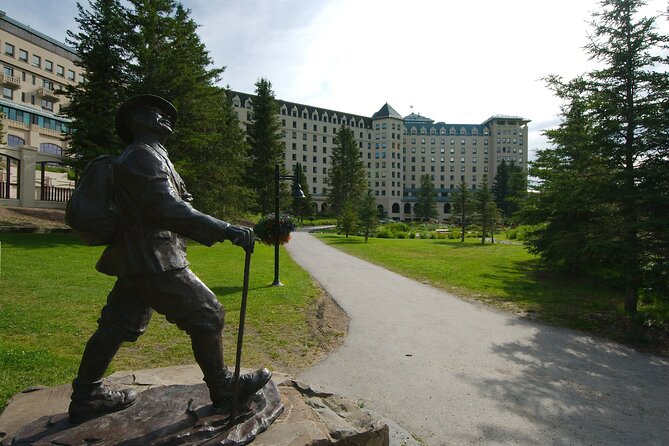
This tour is a strong match if you want:
- a self-paced hike with guidance
- the trail story without a big group
- the flexibility to travel with your own mini “crew” using multiple devices
It may be less ideal if:
- you need guaranteed tech reliability (since the experience depends on your phone)
- you want a flat, low-effort hike
- you’re very sensitive to constant uphill movement, because the route rises the whole way
If you’re traveling solo, it’s still private—just you and the guide in your pocket. If you’re traveling with family or friends, it can work well because you can download for the number of devices tied to your group.
Book this tour? My practical recommendation
I’d book this if you’re the type who likes learning while walking and you’re comfortable using your phone as your guide. The mix of offline GPS, autoplay commentary, and a 7 km Tea House payoff at a very low cost is the kind of value that makes a day in Lake Louise feel richer without paying for a full-on guided group day.
I’d think twice if you’re worried about app performance. One person had the app not work, and another had audio cut in and out. If your phone is old, low on battery, or you’ve had GPS issues in the past, test your audio and GPS settings beforehand. Bring a power bank and download on Wi‑Fi—those two steps fix a lot.
If you’re ready for a steady uphill hike and you want the trail to talk back through your screen, this is a smart way to do Lake Agnes on your terms.
FAQ
How long is the Lake Agnes Tea House Trail audio tour?
It’s listed as about 2 to 3 hours.
Is this a private tour or will I share it with other people?
It’s private. Only your group participates—no other travelers join you.
Do I need cell service during the hike?
No. Download the tour on Wi‑Fi first, and the app can be used on a smartphone without signal and without using data during the tour.
Does the tour include live GPS navigation and autoplay audio?
Yes. You get a live GPS map showing your location and where to go next, and the guide commentary plays automatically when you get close to each point of interest.
Are headphones provided?
No. Headphones aren’t provided. Audio can play from your device speaker, but headphones are optional.
What language is the tour in?
The tour is offered in English.
What if I cancel?
You can cancel for free up to 24 hours in advance for a full refund. If you cancel less than 24 hours before the start time, the amount paid isn’t refunded.