REVIEW · BANFF
Discover the Rockies: 6 Self-Guided Smartphone Audio Tour Bundle
Book on Viator →Operated by Tripvia Tours · Bookable on Viator
Banff gets way more interesting when you have stories in your ears. This bundle turns a solo car day (and two short town walks) into a self-paced audio adventure across Banff and Canmore, plus big road-show driving routes and two nature-style walks.
What I like most is the offline-ready setup (download ahead, then you’re not stuck hunting for signal), and the freedom to skip ahead when your curiosity is elsewhere. You’re not on a clock—just on a route.
One thing to consider: success depends on your phone prep. If downloading or GPS timing is frustrating for you, this format may feel like extra work. The good news: you can reduce that risk with a simple test before you leave town.
In This Review
- Key highlights worth your attention
- Banff at your pace: how this audio bundle changes the day
- Offline-ready listening: download strategy that saves your trip
- How the self-guided format works (and why it’s better than it sounds)
- Driving routes: the Rockies with stories tied to what you see
- Calgary to Lake Louise style scenic driving
- Banff and the routes inside the park area
- Kananaskis Country and the approach into Banff
- Canmore through the windshield: names, museums, and river views
- Lake Agnes Tea House Trail and Tunnel Mountain: nature, guided by your own footsteps
- Walking tours in Banff and Canmore: two towns, lots of small details
- Sights of Banff walking: from pavilions to park-protection ideas
- Sights of Canmore walking: bears, mining, rivers, and names you’ll remember
- Price and value: $35.10 for up to 15 people
- Tips to avoid common snags
- Should you book this Rockies audio bundle?
- FAQ
- How many people can be in a group booking?
- How long does the experience take?
- Is this tour fully self-guided?
- Do I need Wi‑Fi or mobile data during the tour?
- What language is available?
- What do I need to bring?
- Can I stop at attractions and spend time there?
- Are there customer service options?
- Is the experience suitable for everyone physically?
- Can I get a refund if plans change?
Key highlights worth your attention

- Download once, listen anywhere with no Wi‑Fi needed during the tour and no data used while you’re out
- Hands-free audio autoplay so you’re driving or walking without constantly tapping
- Live GPS map on multiple tours for point-to-point navigation and flexible stop time
- 6 tours in one bundle covering Banff, Canmore, Icefields Parkway, Calgary ↔ Lake Louise, plus Lake Agnes Tea House Trail and Tunnel Mountain
- You control the pace: stop for as long as you like, skip what you want, and your tour can pick up where you left off
Banff at your pace: how this audio bundle changes the day
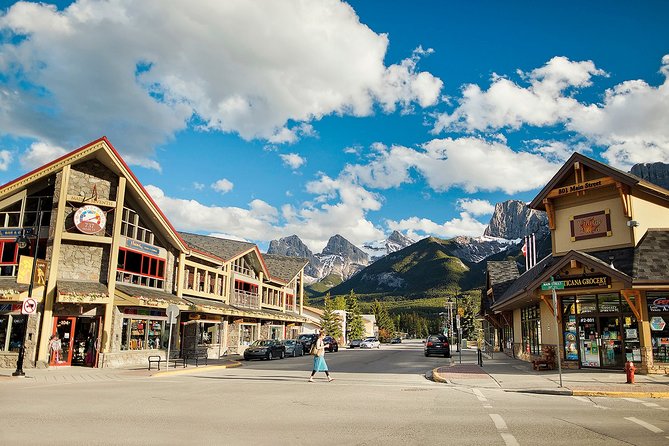
This bundle is built for the kind of travel day I actually enjoy: you choose what you see, when you see it, and how long you linger. Instead of committing to a rigid group schedule, you move at your own speed and let the audio fill in the context.
The practical magic here is that you don’t need signal while you go. Download the tours on Wi‑Fi before you start, then listen during your drive and walks without worrying about coverage gaps. That matters in the Rockies, where cell service can be spotty right when you want to use maps or anything else.
It also helps that audio plays automatically. You’re not constantly managing playback while you’re walking past a building or creeping along a viewpoint pullout. Just press play once (or follow the app’s prompt), then keep your attention on the sights.
And yes, there’s a smartphone-and-car reality check. This is for your group with your own vehicle. No transportation is provided, so it’s best if you’re already planning to drive around Banff and the Banff area anyway.
You can also read our reviews of more guided tours in Banff

Offline-ready listening: download strategy that saves your trip

This bundle is designed around prep done before you leave Wi‑Fi. If you do that well, you get a low-stress, no-signal experience once you’re out on the road.
Here’s how I’d set it up so it doesn’t turn into an afternoon of frustration:
- Plan to download before you drive. The tour includes guidance that you’ll be able to download on Wi‑Fi and then use it with no signal needed during the tour.
- Do a quick test after downloading. Start one tour segment and walk a few steps or sit in your car to confirm audio plays and GPS behaves the way you expect.
- Know it’s one app. The experience uses the Tripvia Tours app (Android and iOS) and includes lifetime access through that app.
Why this matters: there have been complaints about difficulty downloading and about the app being unclear in navigation. Those issues seem to cluster around setup and getting directions right—so your best move is to remove uncertainty ahead of time.
How the self-guided format works (and why it’s better than it sounds)
This isn’t just “press play and hope.” Several parts of the bundle use a live GPS map, and that changes how you move through town and along roads.
When you see a point pop up, you can:
- Stop and listen without losing time to a group gathering point
- Spend as long as you like at attractions (the tour explicitly allows you to pause your time at a point)
- Skip ahead if you’re done with a stop but still want the next story
That flexibility is the main advantage of combining independent travel with the structure you’d normally get from a guided tour.
There’s also a useful trick built into the experience: if you park and visit something briefly, some segments can pick up where you left off. That matters when you’re doing real-life sightseeing—like walking into a museum—rather than just standing and moving on.
Driving routes: the Rockies with stories tied to what you see
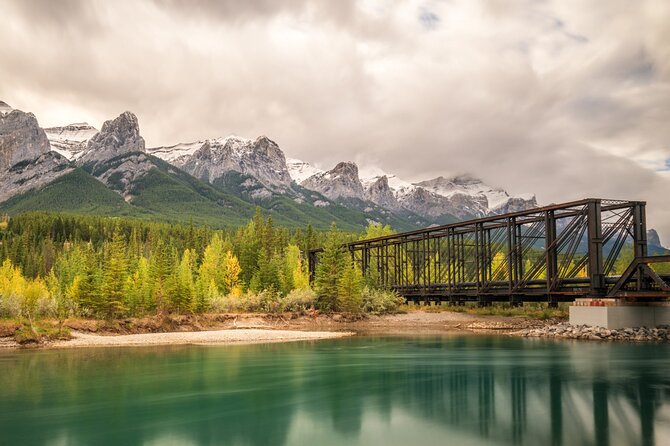
The driving portion of this bundle is the backbone. You get audio-driven routes that point out mountains, town history, parks, tunnels, rivers, and scenic stops along the way.
Calgary to Lake Louise style scenic driving
One of the included driving tours focuses on the route from Calgary to Lake Louise. Expect the audio to act like a roadside guide that explains what you’re looking at and why it matters—without forcing you to pull over at every minute.
You’ll encounter stories tied to names and places, including:
- A nice lake in the foothills area, with audio about the fun people have there
- Explanations for highway-village names
- A stop where you’ll learn about an attraction connected to the area’s environment and history (including a story about how the upper hot springs were discovered, with the option to stop and visit during the tour)
Even if you don’t park for long, the audio helps you see the area as more than scenery. It turns driving time into learning time, without slowing you down.
You can also read our reviews of more tours and experiences in Banff



Banff and the routes inside the park area
Another big driving experience is built around the idea that you’re driving through a large portion of Banff National Park, so you might as well learn while you go.
The audio points out things you’d otherwise miss:
- Cultural and naming stories tied to recognizable features
- A campground stop you’ll pass—useful for understanding what kind of travel life people build here
- Additional park-focused context that’s included even where you might not actually drive through a specific park segment
There are also driving segments that spotlight classic “spot it and learn it” moments:
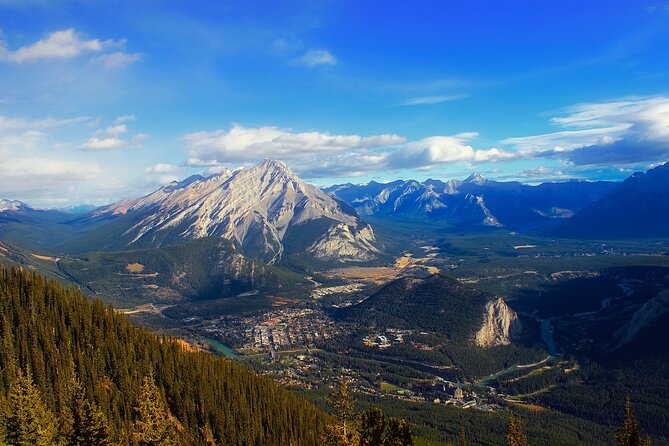
- The iconic Three Sisters mountain, including the sisters’ names
- A mountain described as looking like a castle
- A tunnel through a mountain, with the tour explaining why it was built and what went wrong
None of these are just trivia. The value is that you learn the backstory while your eyes are on the real thing. That’s when it sticks.
Kananaskis Country and the approach into Banff
You also get a driving tour focused on Kananaskis Country. This is a strong pick if you want a wider sense of the region beyond just the Banff town core.
Along the way, you’ll also get audio tied to the transition into the national park—like seeing the last industrial building before entering Banff National Park (or after leaving). That kind of contrast is one of my favorite ways to understand a place: the shift between human industry and protected wild space, shown in a way you can actually witness from your car.
Canmore through the windshield: names, museums, and river views
The Canmore-related driving sections focus on how the town got its identity—starting with how Canmore got its name—and then looping back through key visual landmarks.
If you like structure, you’ll appreciate these kinds of moments:
- The audio points out an iconic mountain and explains how it got its name and who discovered it
- You’ll hear about Canmore Museum (with a built-in idea that if you stop and visit, the tour continues where you left off)
- The tour brings up a mountain river multiple times, so you’re not just seeing it once—you’re understanding it through repeated storytelling beats
- You’ll pass or be pointed toward a small mountain village, with audio to help you connect the names to what you’re seeing
This is great for a day where you want to drive slow enough to enjoy views, but still cover a lot of ground.
Lake Agnes Tea House Trail and Tunnel Mountain: nature, guided by your own footsteps

Two nature-style audio tours round out the bundle: Lake Agnes Tea House Trail and Tunnel Mountain.
Because the format is self-guided audio, you’ll be using your own pace and deciding how long to stay with each viewpoint or story. For me, that’s ideal in hiking contexts: you’re not forcing a time limit, and you’re not rushed away from where you want to stand and look.
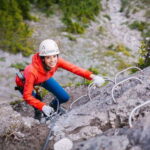
One other point: the overall experience lists moderate physical fitness as a requirement. So it’s a good match for active walkers who want something more than street-level strolling, but it may not suit visitors who are looking for fully flat, low-effort sightseeing.
If you do these hikes, I’d treat them like real hikes, not like an audio podcast walk. Bring layers, expect changing weather, and plan for the fact that mountain conditions can shift fast.
Walking tours in Banff and Canmore: two towns, lots of small details
The walking parts are short but information-dense. They use a live GPS map so you can find the stops without constantly checking your phone screen.
Sights of Banff walking: from pavilions to park-protection ideas
In Banff, the walking tour is built around a classic mix of:
- architecture and local landmarks
- national-park design ideas
- and stories tied to people who helped shape the town
You’ll hear about the kind of outdoor space Banff values, including:
- A 4-acre park built in the 1930s with terraced gardens
- The Cambrian pavilion (connected to ideals of protecting designated wilderness areas)
- The Devonian pavilion as an example of rustic design within the national parks program
It also includes practical “what am I looking at?” moments:
- An elevation marker implanted in the sidewalk (looks like a coin)
- Crandell Peck Cabin, described as one of Banff’s oldest buildings, built in 1907
- The Banff Powerstation story, tied to powering streetlights and homes in 1905
- A Tarry-a-while residence, connected to Mary Schaffer Warren and her early explorations and writing
- Caribou Corner tied to the Brewster family arriving in 1886
And then there’s the deeper “town layers” section:
- A look at Banff Ave history via buildings like the Dave Whyte block and Harmony Lane
- Cultural context connected to churches, monuments, and museum collections
- Park management context through a Superintendent’s Residence
- A final touch with the Banff Legion and cenotaph built in 1920
If you enjoy history that’s visible in the real street grid, this is the walking tour that makes Banff feel like a living place, not just a backdrop for photos.
Sights of Canmore walking: bears, mining, rivers, and names you’ll remember
Canmore’s walking tour gives you a different flavor. It’s still packed with landmarks, but it leans more toward how the town grew, how people worked, and what you can see today.
You’ll start with visual history anchors, including a stop tied to the Three Sisters Gallery and a reason it’s worth a quick peek inside. Then you’ll move through town points like:
- the Canadian Pacific Railway and its effect on Canmore
- a British red telephone box (yes, the UK-style ones you’ve probably seen in photos)
- black bear and grizzly bear sculptures, plus differences between the two
The tour also connects place names to specific views. You’ll get a view of the mountains to the north and hear about how mountains like Princess Margaret Mountain, Squaw’s Tit, Mount Charles Stewart, Mount Lady MacDonald, and Mount Grotto got their names.
For a breather, there’s a nature loop element:
- a walk about one kilometer
- passing creeks and ponds with fish
- forested areas where songbirds may be heard
- and a boardwalk section that ties the walk to the Bow River
Even if you don’t go farther than the tour route, the audio helps you understand why this river and terrain matter.
On the town culture side, the tour includes:
- a coal mining cars monument tied to mining’s early importance
- a mural of Isabelle Dube and the tragic story behind it
- a museum noted for having over 10,000 artifacts and welcoming visitors since 1984
- a park connection between Canmore and the Japanese city of Higashikawa
- Main Street shops and galleries
- a stalwart building built in 1890 by Count Eugene de Rambouville
- and stops connected to law and order through barracks in rougher early days
It’s a lot for a walking tour, and because it’s GPS-guided, you don’t have to guess your way between stops.
Price and value: $35.10 for up to 15 people

At $35.10 per group (up to 15), this bundle is priced like a crowd-friendly activity rather than a per-person ticket.
That’s where the value comes in:
- If you’re traveling with a family, two couples, or a small group, the cost per person drops fast.
- You’re essentially paying for a library of audio tours, including driving routes, walking tours, and two nature/hiking tours.
- And the bundle includes lifetime access through the Tripvia Tours app, which means you can reuse it on a future trip (or revisit the parts you skipped).
The main value risk isn’t the dollar amount—it’s whether you’re the type of traveler who will actually use audio prompts and GPS-based stop navigation. If you prefer to fully unplug and wander without any structure, you might not get your money’s worth.
Tips to avoid common snags

Based on the kind of app complaints that pop up with smartphone tours, I’d plan around two predictable problem areas.
First: setup friction. Download prep matters. Test audio playback before you’re hungry and parked at your first viewpoint.
Second: navigation clarity. If GPS is spotty, location prompts can feel confusing. A practical fix is to keep your app open, and if things seem off, restart the app and try again so it refreshes the signal—especially if you’re driving and the screen feels like it’s doing too much.
If you do the setup right, the rest of the day tends to flow.
Should you book this Rockies audio bundle?
Book it if you want:
- Flexible driving and walking in Banff and Canmore without booking multiple separate guided tours
- A bundle that turns road time into meaning, with stories tied to what you see
- A cost structure that can work well for groups up to 15
Skip or rethink it if:
- You’re unwilling to troubleshoot a phone app on your trip
- You’re not planning to drive your own route (this bundle requires your own transportation)
- You need attractions to be guaranteed open every day. Some recommended stops may be closed or inaccessible depending on season.
If you’re an active, curious traveler who likes to learn while you look, this bundle is a strong way to get more out of Banff without adding group-tour stress.
FAQ
How many people can be in a group booking?
The price is per group up to 15 people, so you can split the cost among your group.
How long does the experience take?
Plan for about 3 to 6 hours, depending on how many stops you make and how long you linger.
Is this tour fully self-guided?
Yes. It’s a self-guided smartphone audio experience with hands-free audio that plays automatically.
Do I need Wi‑Fi or mobile data during the tour?
No. You’re instructed to download before you go on Wi‑Fi, and during the tour there’s no signal required and no data used.
What language is available?
The audio is offered in English.
What do I need to bring?
You’ll need a smartphone or tablet to run the Tripvia Tours app, and you’ll use your own vehicle since transportation isn’t included.
Can I stop at attractions and spend time there?
Yes. The tours are designed for flexibility—there are points of interest where you can stop and visit and stay as long as you like.
Are there customer service options?
Yes. There is customer service by phone and email.
Is the experience suitable for everyone physically?
It lists a need for moderate physical fitness level.
Can I get a refund if plans change?
Yes. Free cancellation is available if you cancel up to 24 hours in advance for a full refund.